
Hata-Mazanka Guesthouses by YOD Group: A Transparent Retreat in Ukraine
On a private estate in central Ukraine, YOD Group reimagines the traditional hata-mazanka as a pair of fully glazed guesthouses, crowned by overscaled thatched roofs. Between rural memory, contemporary hospitality and low-impact engineering, the project becomes a quiet manifesto for terroir-driven sustainable design.
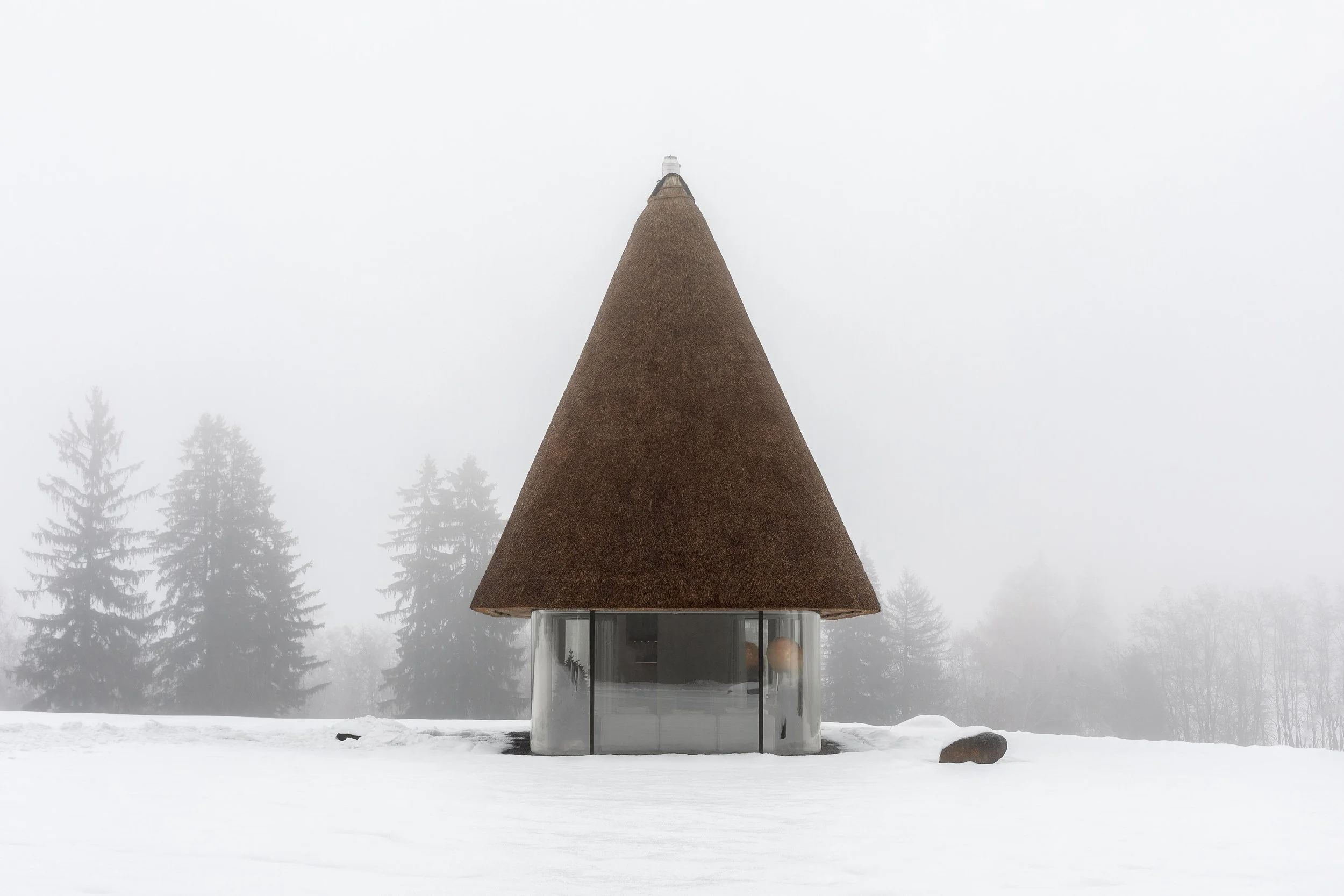
A tall hat in the landscape
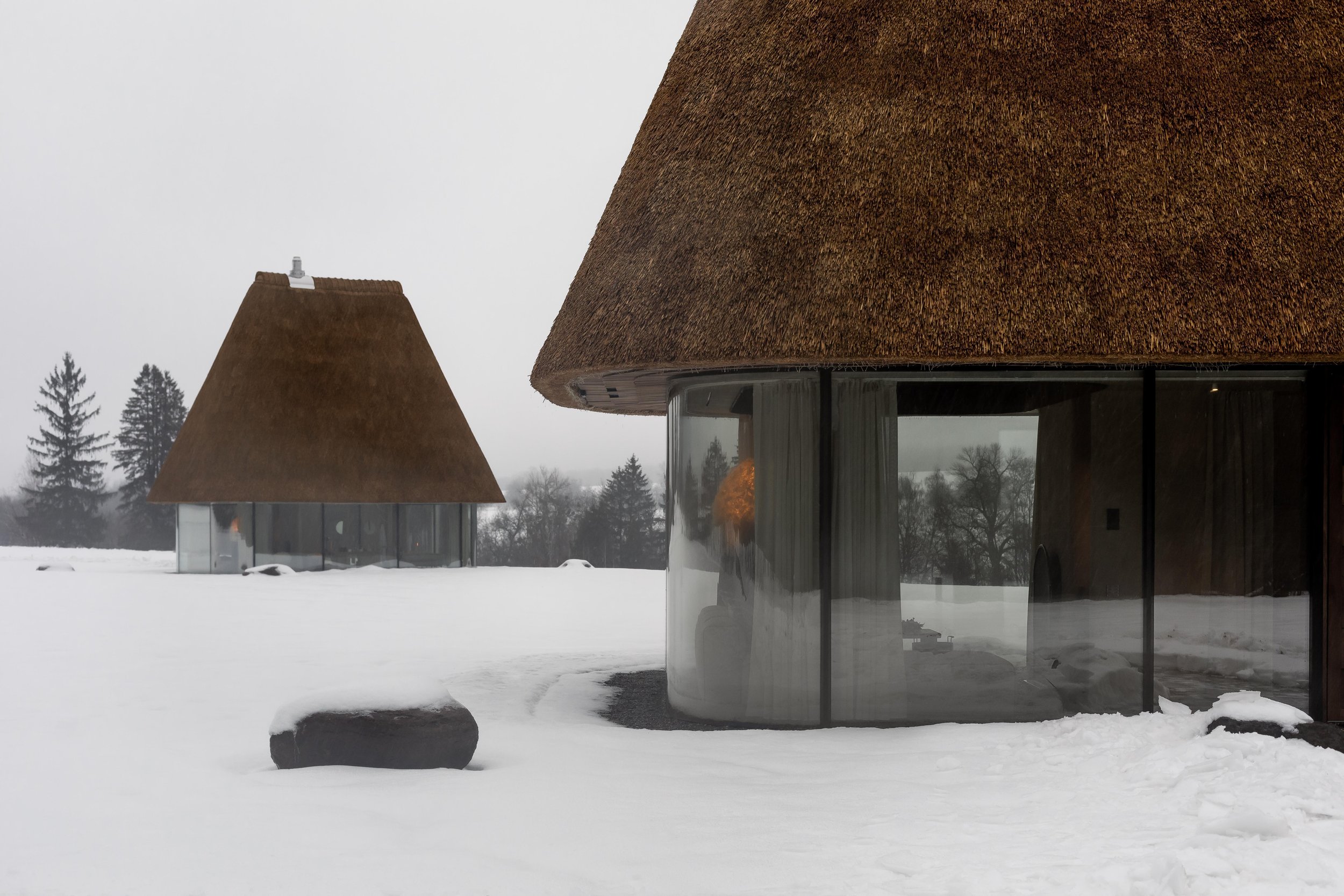
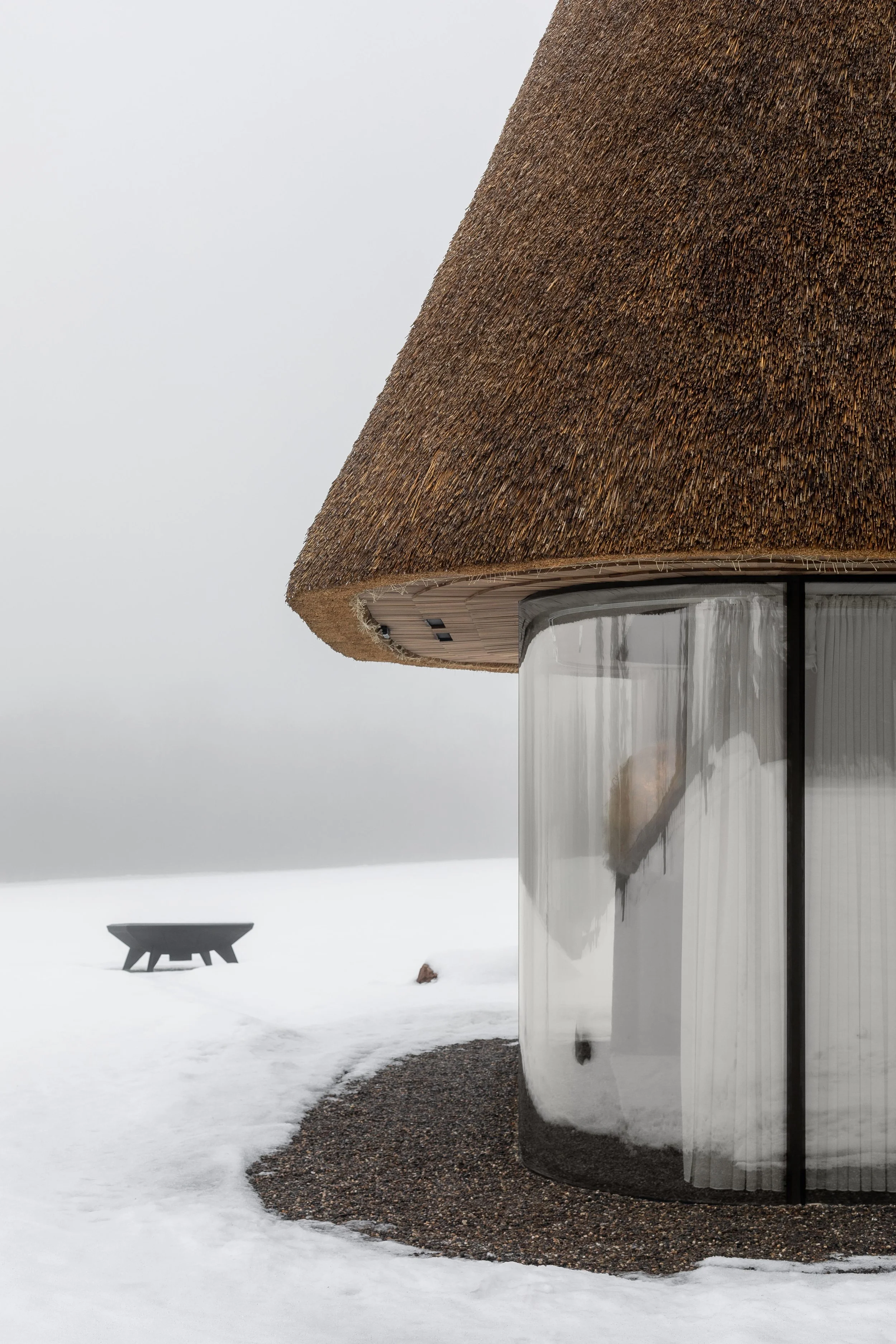
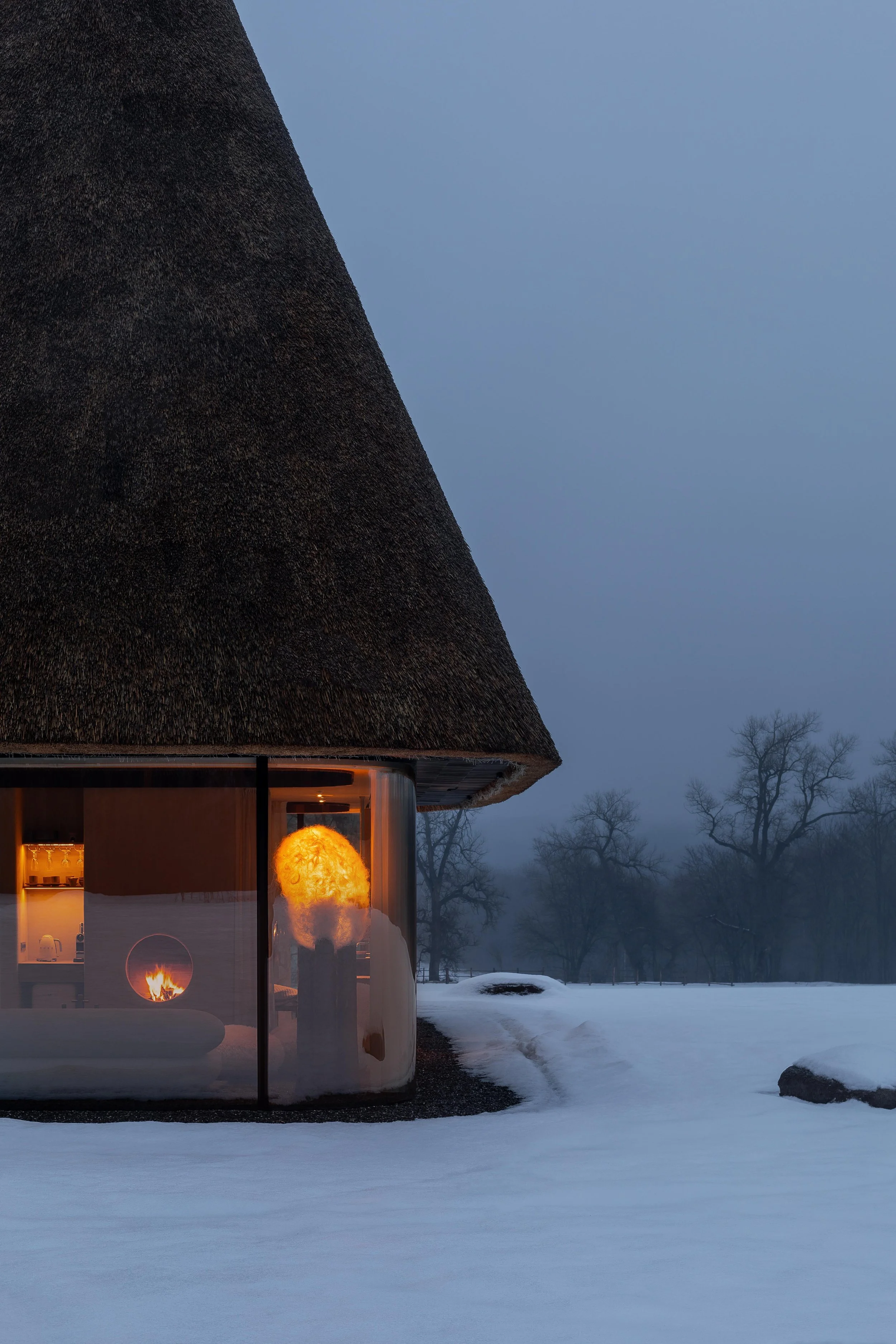
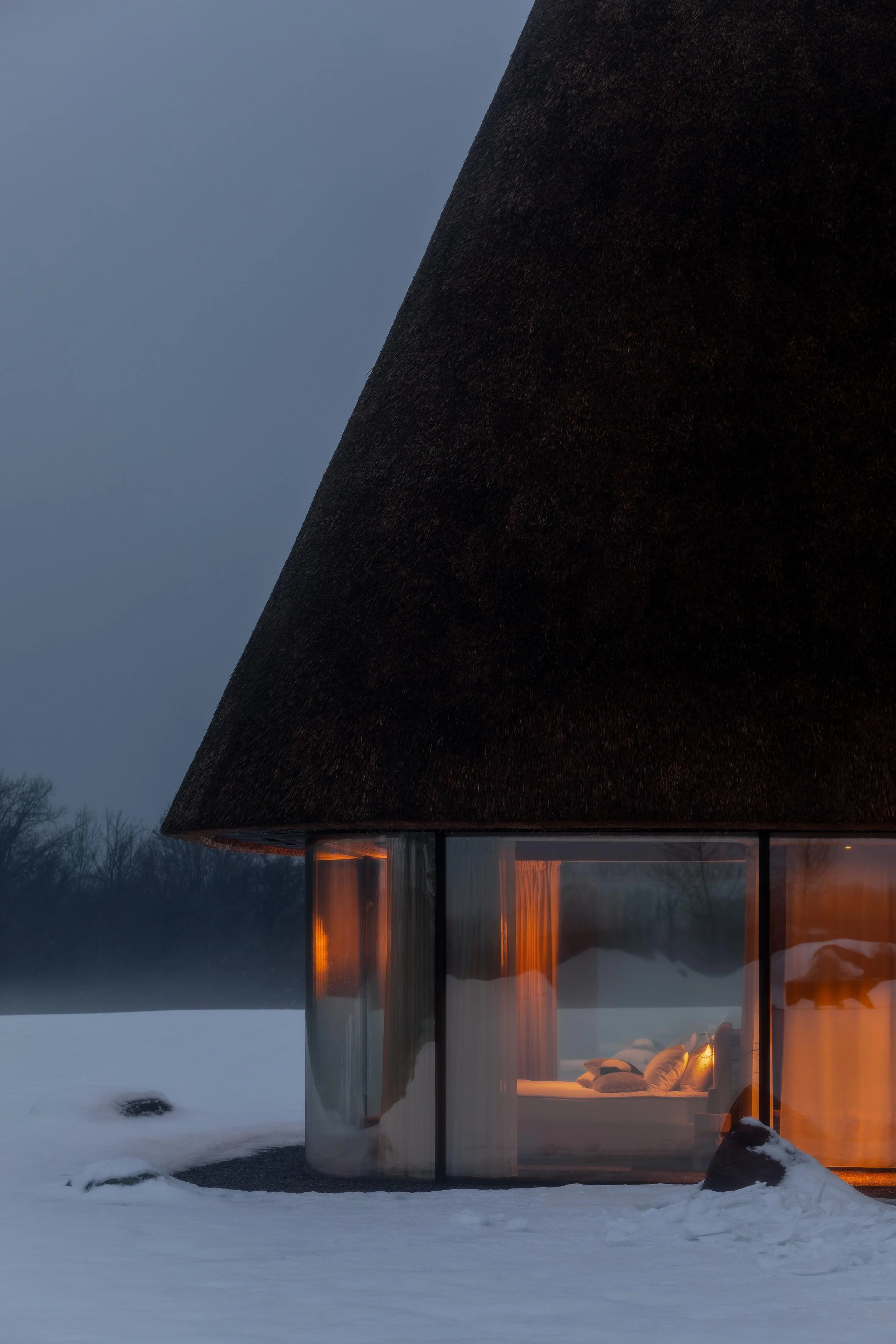
From a distance, the guesthouses read almost like land sculptures: deep, tapering roofs rising from the field, somewhere between a traditional tall hat and an oversized mushroom. Only at the threshold do you realise that what supports these thatched volumes is not a familiar whitewashed house, but glass—continuous, almost dematerialised façades that open the interior entirely to the Ukrainian landscape.
The project, located on a private estate in one of Ukraine’s central regions, is YOD Group’s contemporary interpretation of the archetypal hata-mazanka: the rural home defined for generations by thick walls, clay and lime plaster, and a roof that anchored both climate and ritual life.
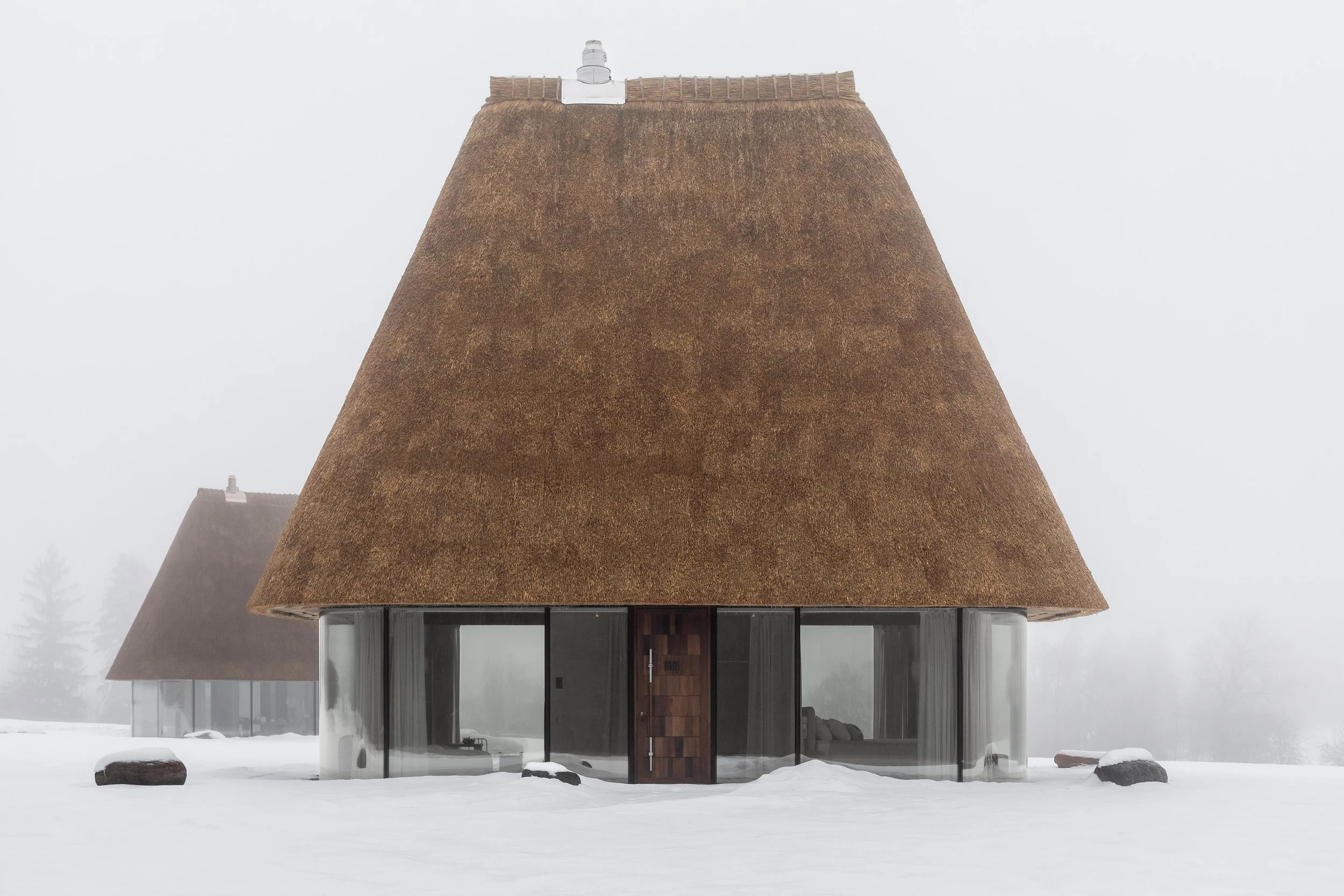
Here, that roof becomes the main architectural gesture: expressive, recognisable, and protective, while everything beneath it is stripped back to light, transparency and carefully calibrated comfort.
Terroir design, not pastiche
YOD Group describes their approach as “terroir design”—not simply using local materials or repeating vernacular forms, but decoding the cultural meanings embedded in them.
“We studied the image of the traditional Ukrainian house, distilled its core characteristics, and reinterpreted them through our own lens,”
explains Volodymyr Nepiyvoda, co-owner and managing partner of YOD Group.
Instead of reconstructing a nostalgic cottage, the studio isolates three essential ideas and pushes them forward:
Care and cleanliness → in the traditional house, the regular act of plastering and whitewashing walls.
Shelter and memory → the roof as a strong, almost symbolic element.
Closeness to nature → daily life organised around landscape, climate and agricultural rhythms.
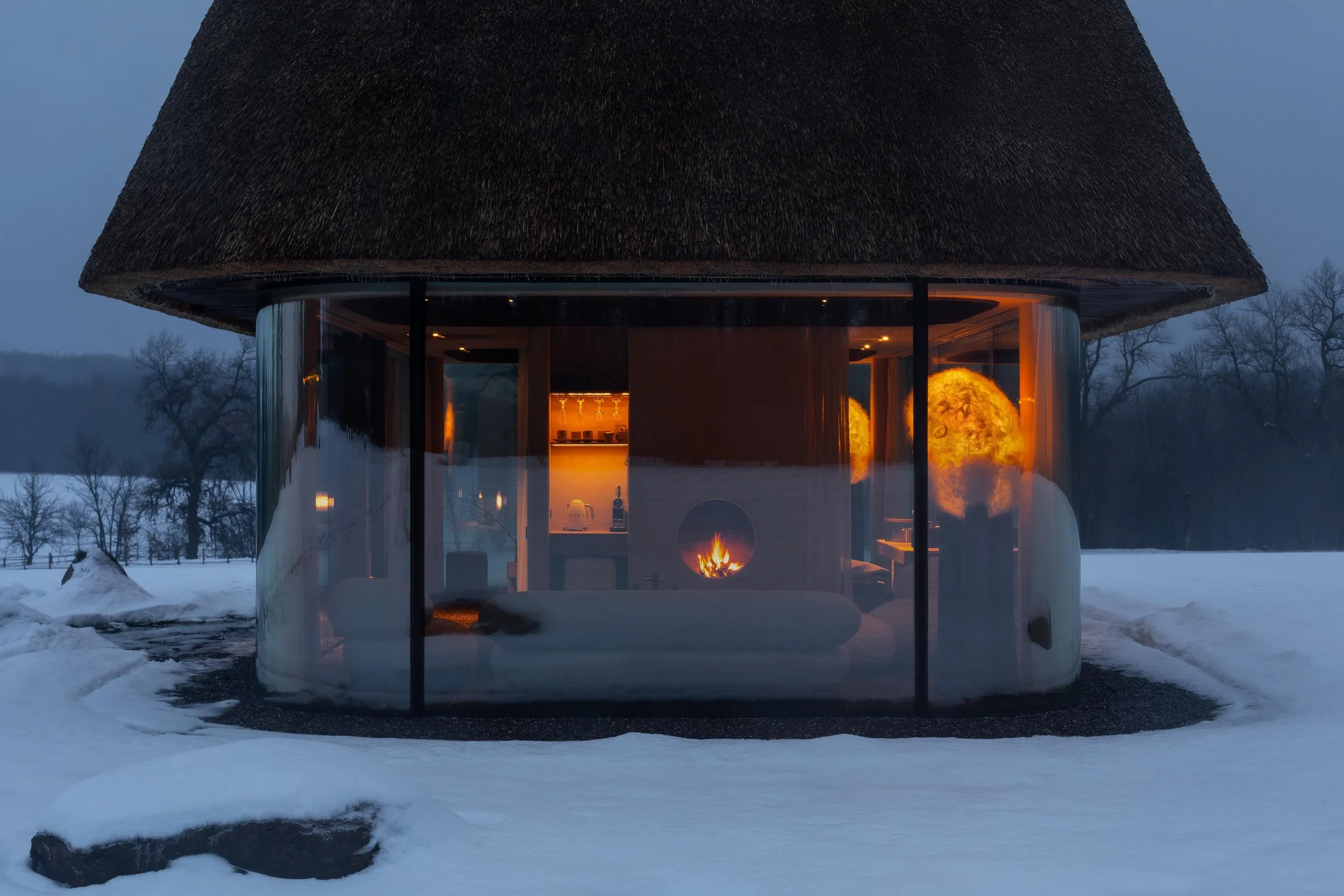
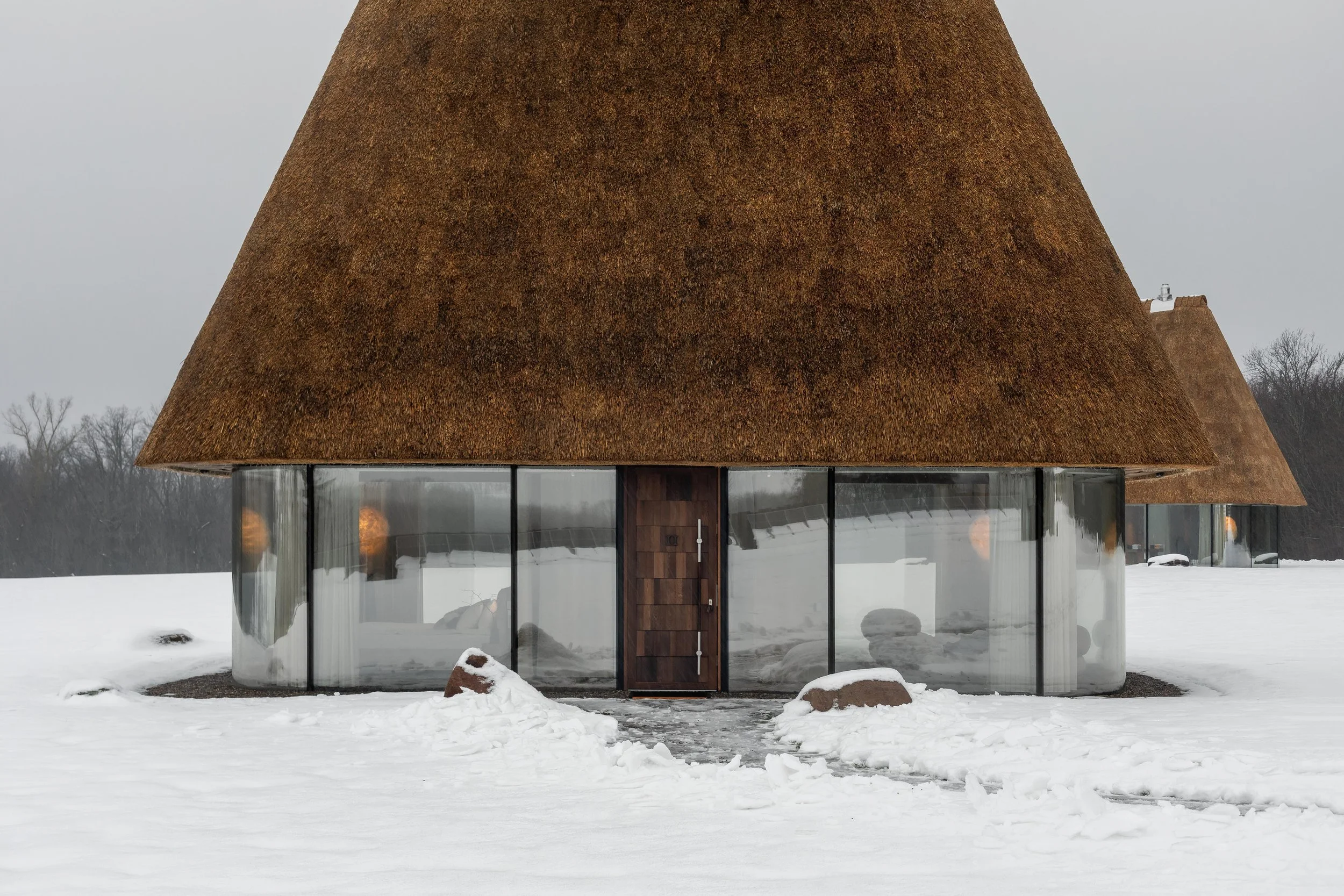
In the new guesthouses, these become transparent façades washed with natural light, a sculptural roof that holds the composition together, and interiors that are constantly in visual contact with the surrounding fields.
Living inside the view
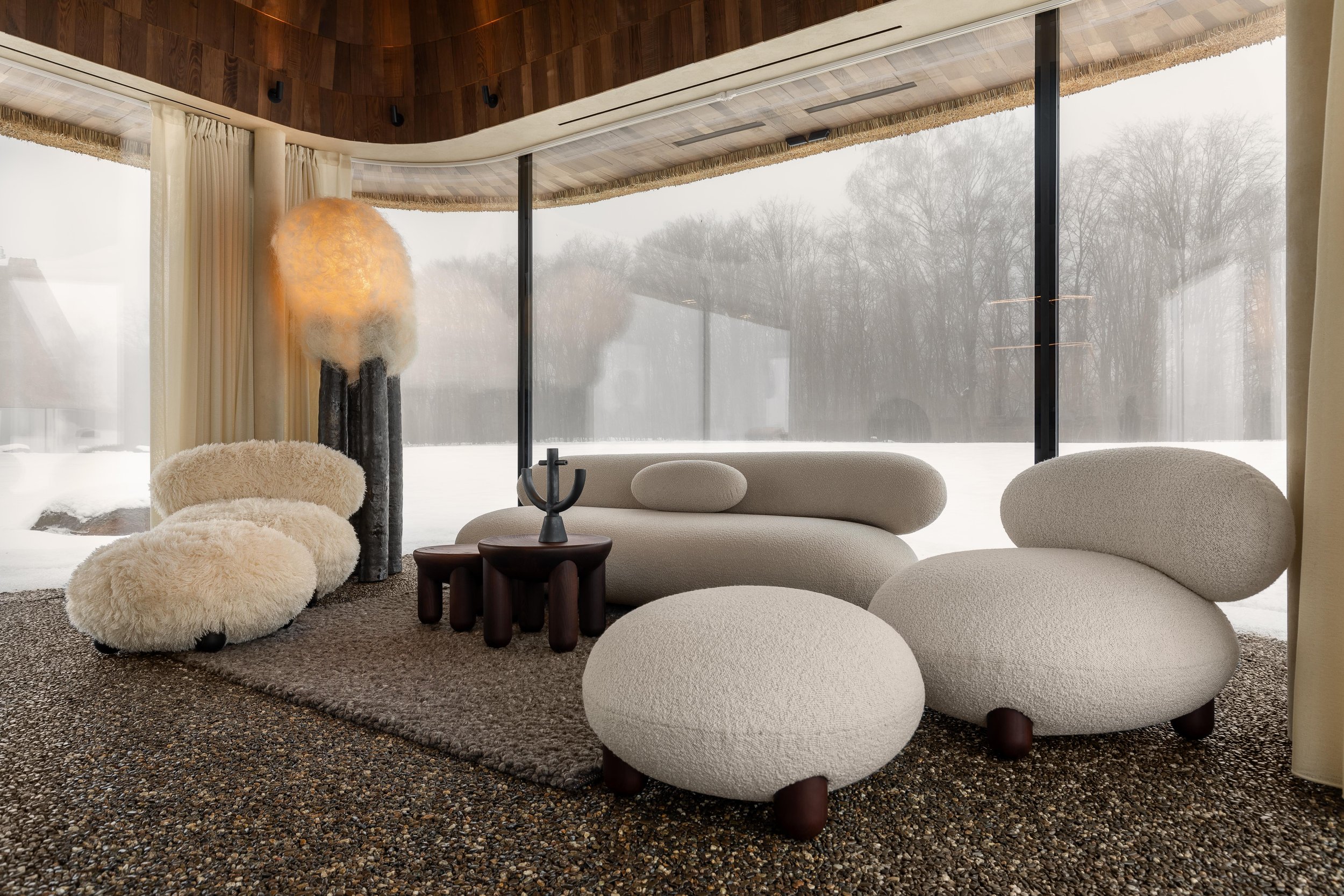
Each guesthouse is organised around a compact concrete core that contains the bathroom and services. On one side, the bedroom; on the other, the living area with a minimalist fireplace that nods to the traditional Ukrainian stove.
There is deliberately no television. Instead, guests are invited to watch live fire through the circular opening of the fireplace, or simply follow the changes of light across the landscape. The idea is subtle but clear: informational detox as hospitality, and time for emotional restoration.
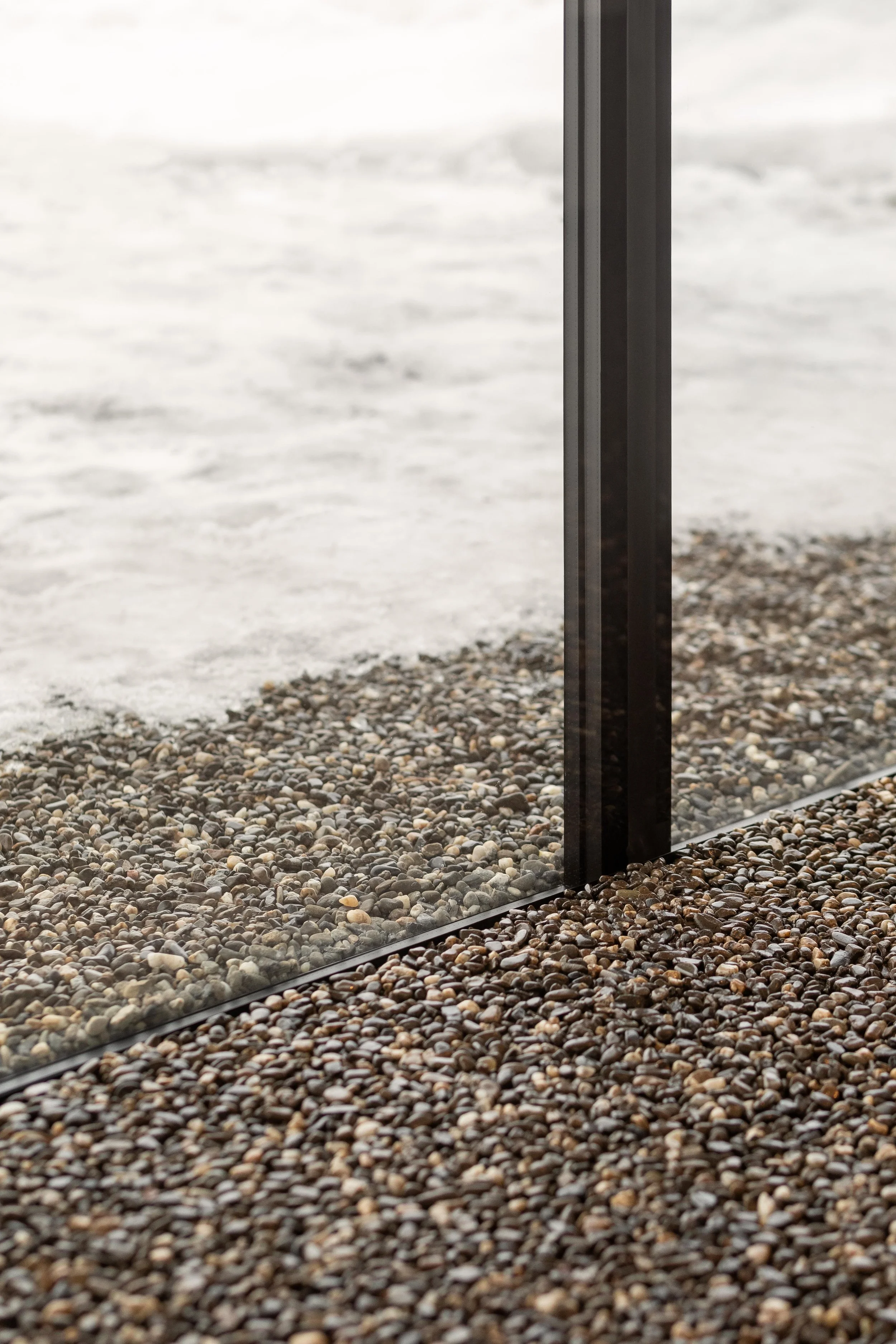
Flooring inside and outside is conceived as a continuous stone-carpet surface—pleasant under bare feet and offering a gentle, massage-like sensation when walking. During the day, the floor extends visually into the terrace and the grass beyond; at night, the reflection of the roof’s wooden interior and the flames create an intimate, sheltering atmosphere.
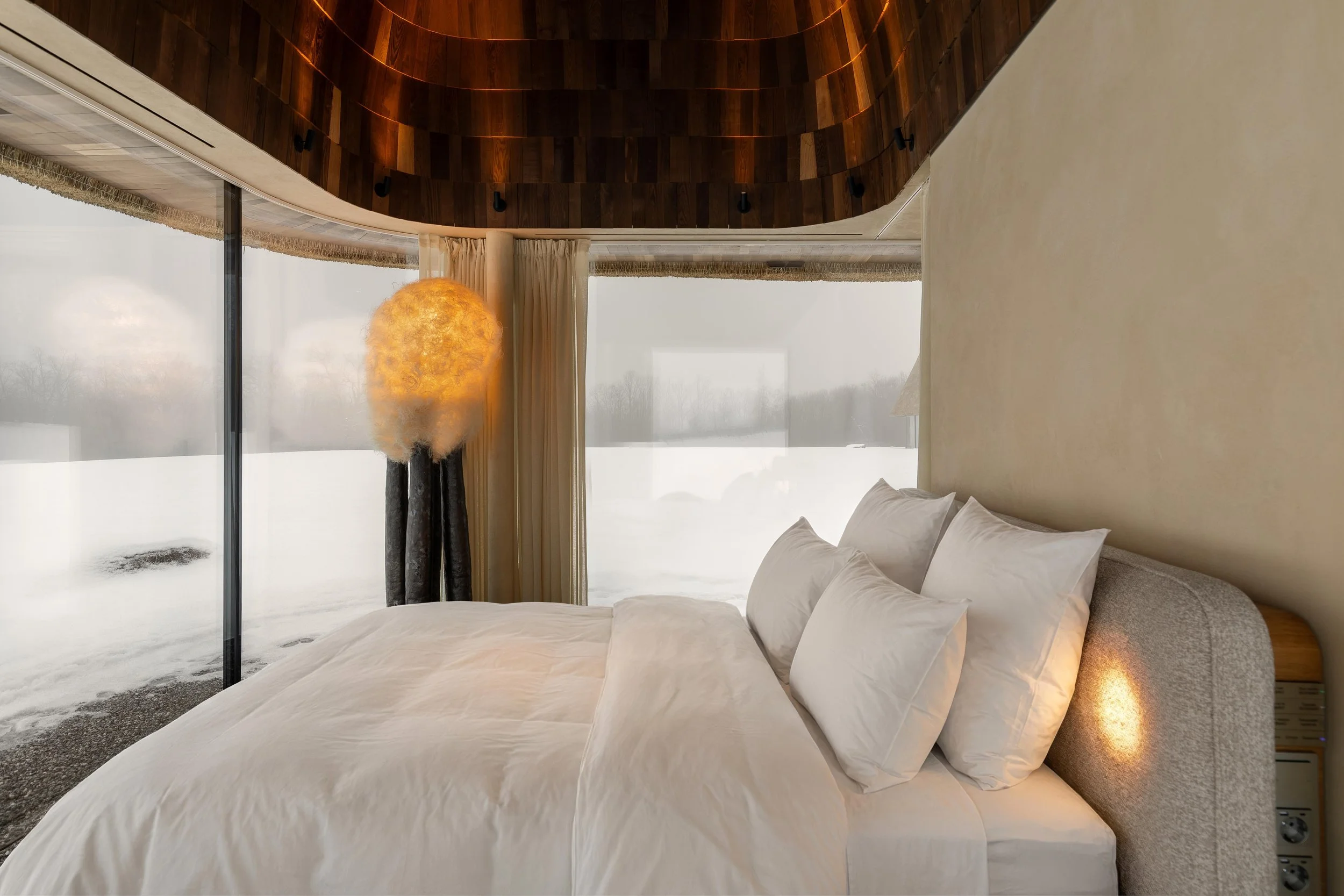
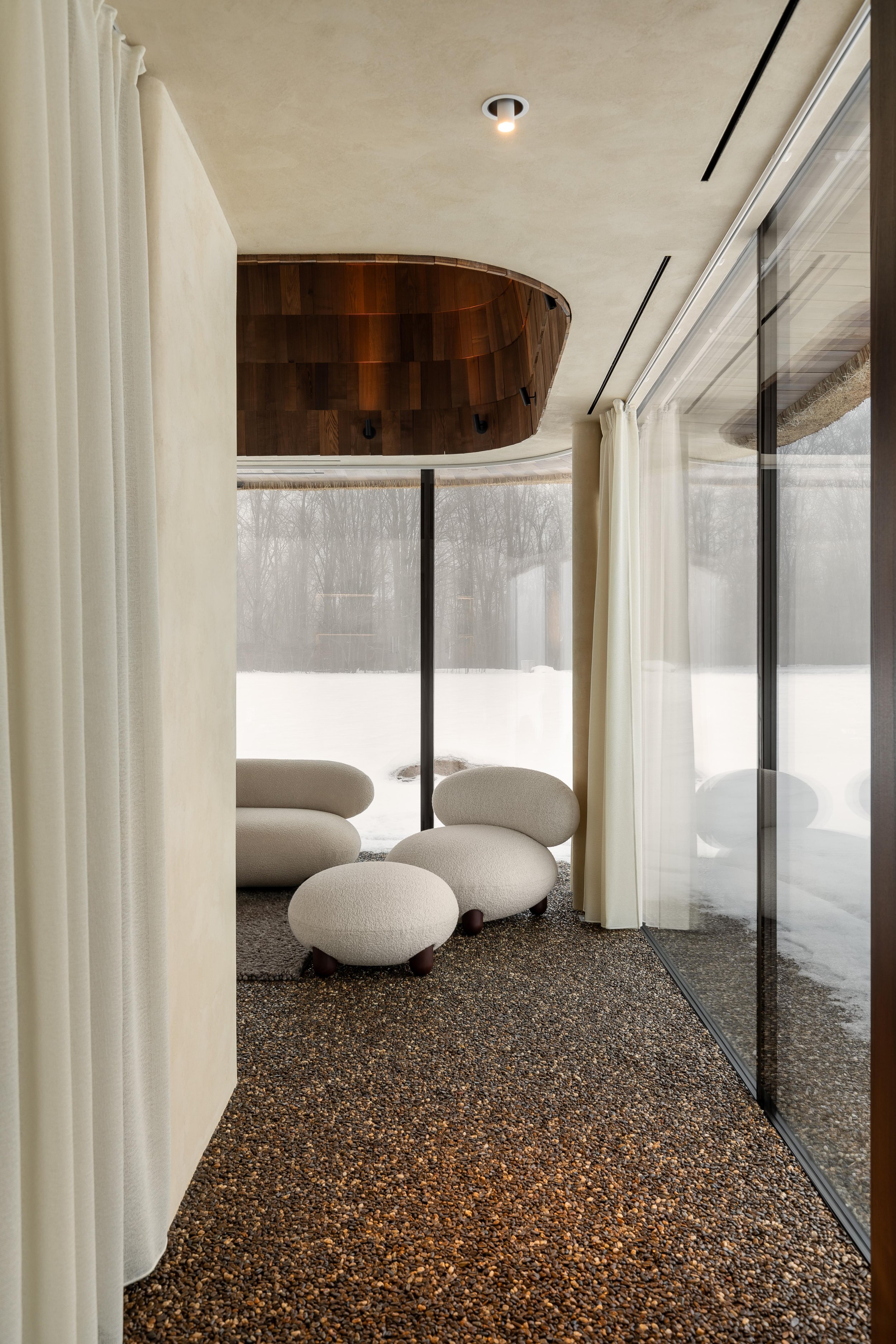
When privacy is needed, dense but visually light curtains descend at the touch of a control panel beside the bed, turning the transparent volume into a cocoon
Eco-minimalism with a Ukrainian accent
The interiors are restrained but rich in tactility. A natural, muted palette—stone, wood, clay tones—keeps visual noise low while letting textures do the work.
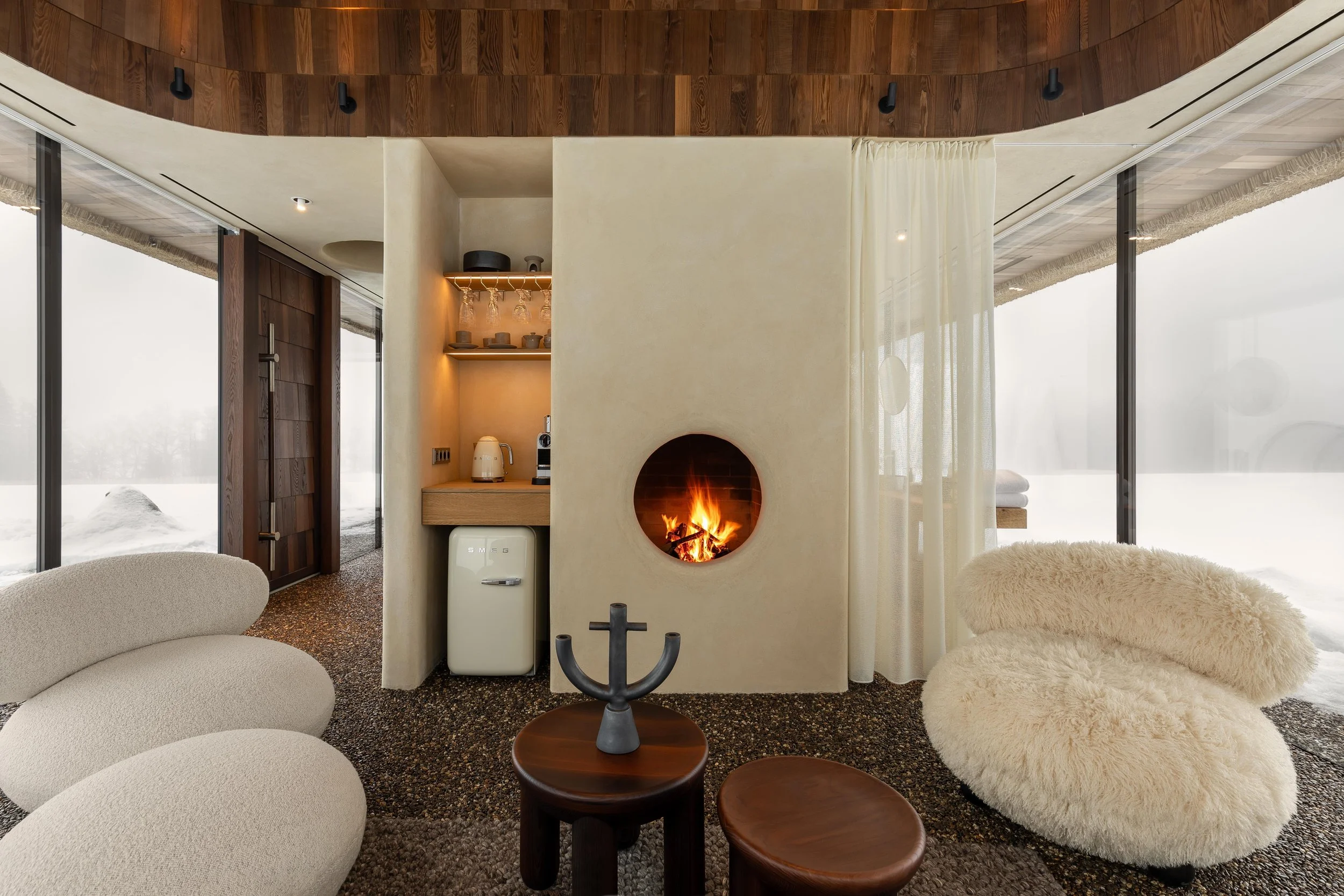
Objects and furniture by Ukrainian brands anchor the design in its local context:
Seating and furnishings by Noom
Black clay decorative pieces by Guculiya
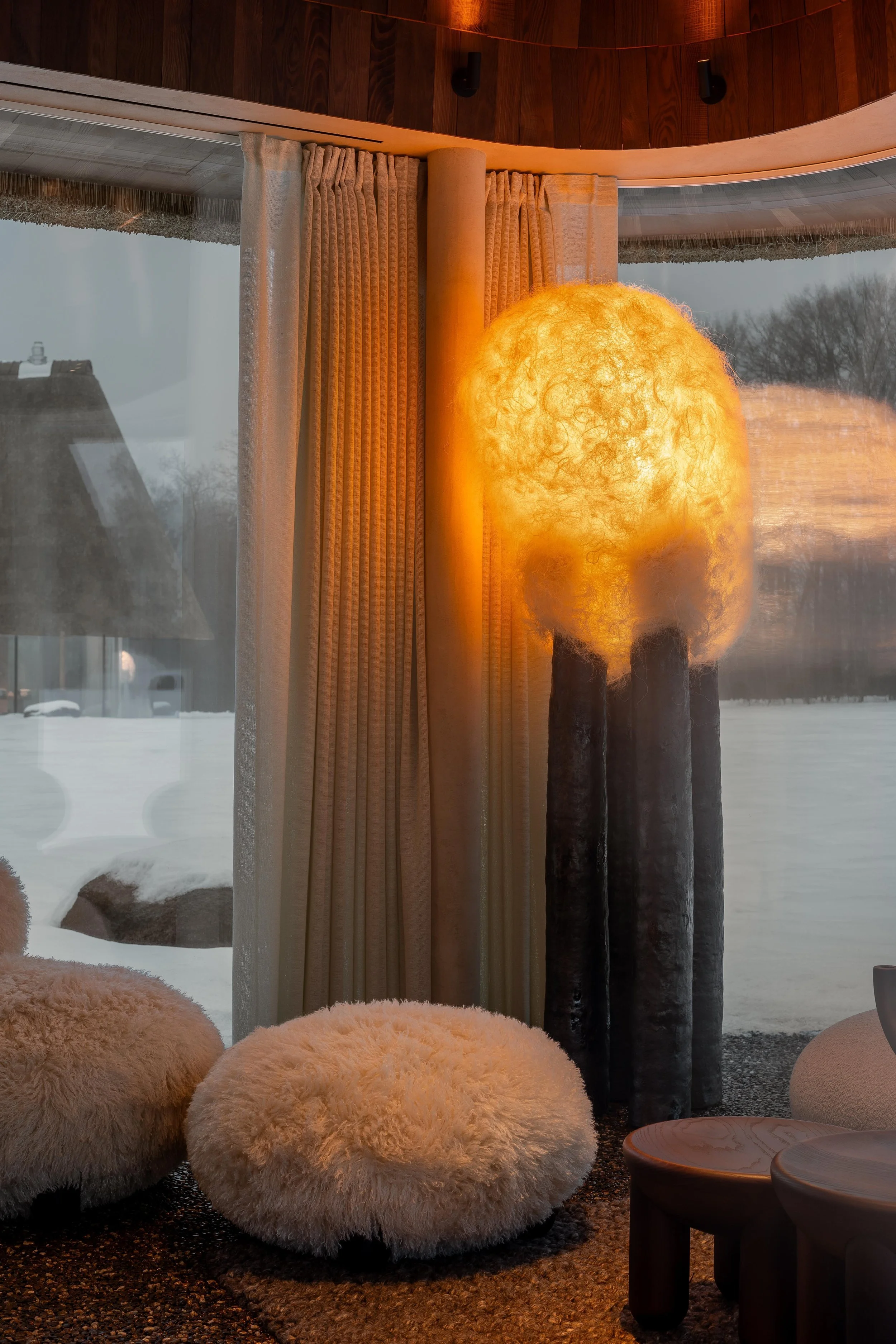
A custom floor lamp in ceramics and natural fibres as a sculptural focal point in the bedroom
The result is a kind of eco-minimalism with an accent: calm, uncluttered spaces that still feel specific, crafted and unmistakably linked to Ukrainian material culture.
Engineering hidden in the dome
If the roof is the project’s most visible statement, it is also the element that quietly absorbs most of the technical complexity.
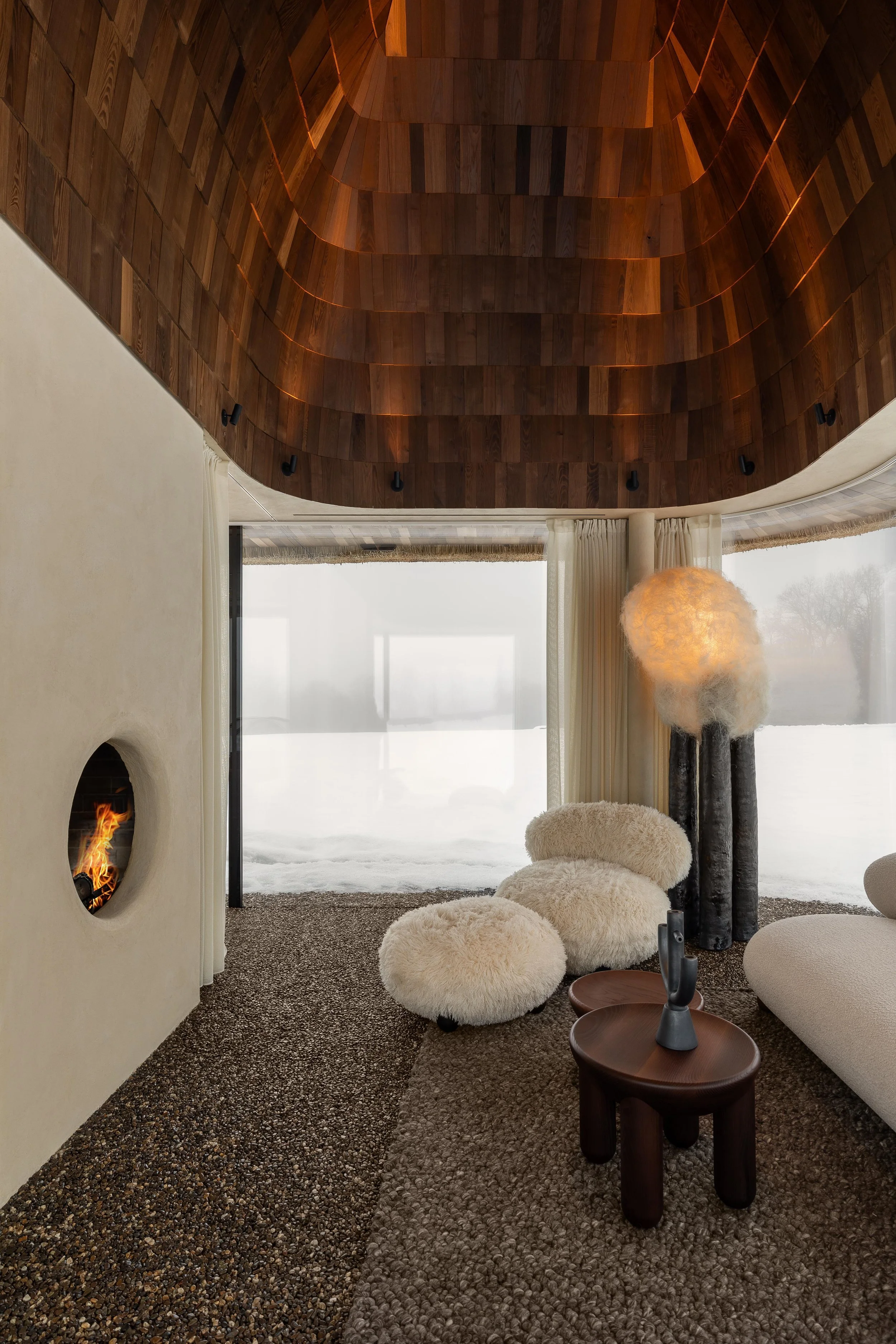
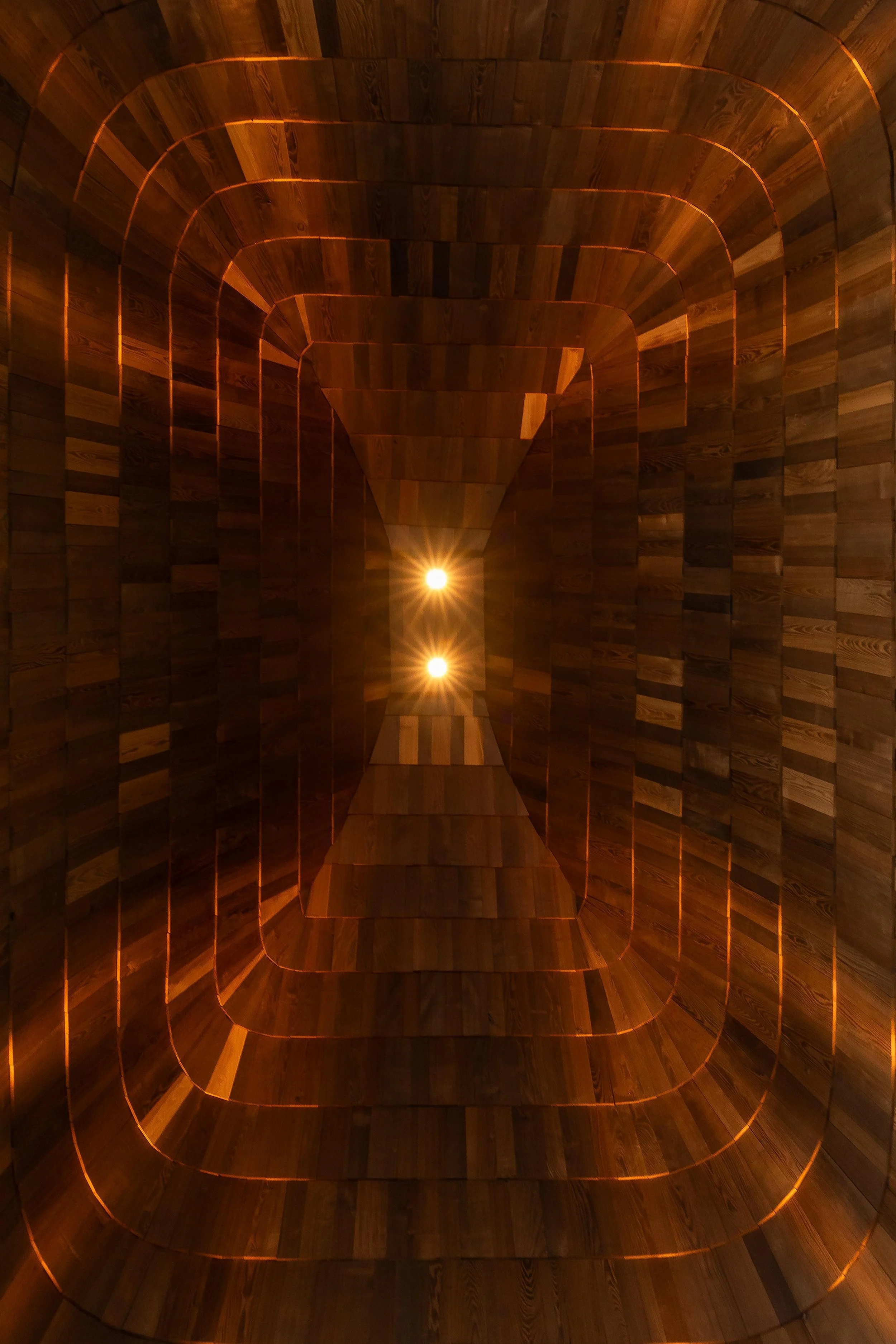
Inside, the dome is clad in wooden tiles that reference the traditional wooden shingles of historic rooftops. Rising up to 10 metres at the apex, it amplifies the sense of volume and verticality, while concealing all engineering systems: air-conditioning, supply and exhaust ventilation, and technical distribution.
A heat pump system maintains comfortable temperatures year-round. Fresh air enters through linear slots integrated into vertical grilles; exhaust outlets are discreetly embedded in the dome and the central core. The walls themselves remain visually clean—no visible ducts, no suspended units—reinforcing the project’s minimal language.
A quiet chapter of The Wave
Within The Wave of Sustainable Design, these guesthouses read as a particularly sensitive case study: not glamorous eco-resort rhetoric, but a precise reworking of vernacular logic for a contemporary, low-impact stay.
A strong local archetype is reinterpreted rather than replicated.
Landscape and climate drive both spatial experience and engineering.
Local makers and materials are given space, from clay and wood to ceramics and textiles.
Project: Hata-Mazanka Guesthouses
Kyiv region, Ukraine
Typology:Guesthouses · Hospitality · Sustainable Design
Area: 50 m² (each unit)
Architecture & Interior Design: YOD Group
Team: Volodymyr Nepiyvoda, Dmytro Bonesco, Natalia Tymochesko, Yana Rogozhinska
Photography: Mykhailo Lukashuk
Year 2026