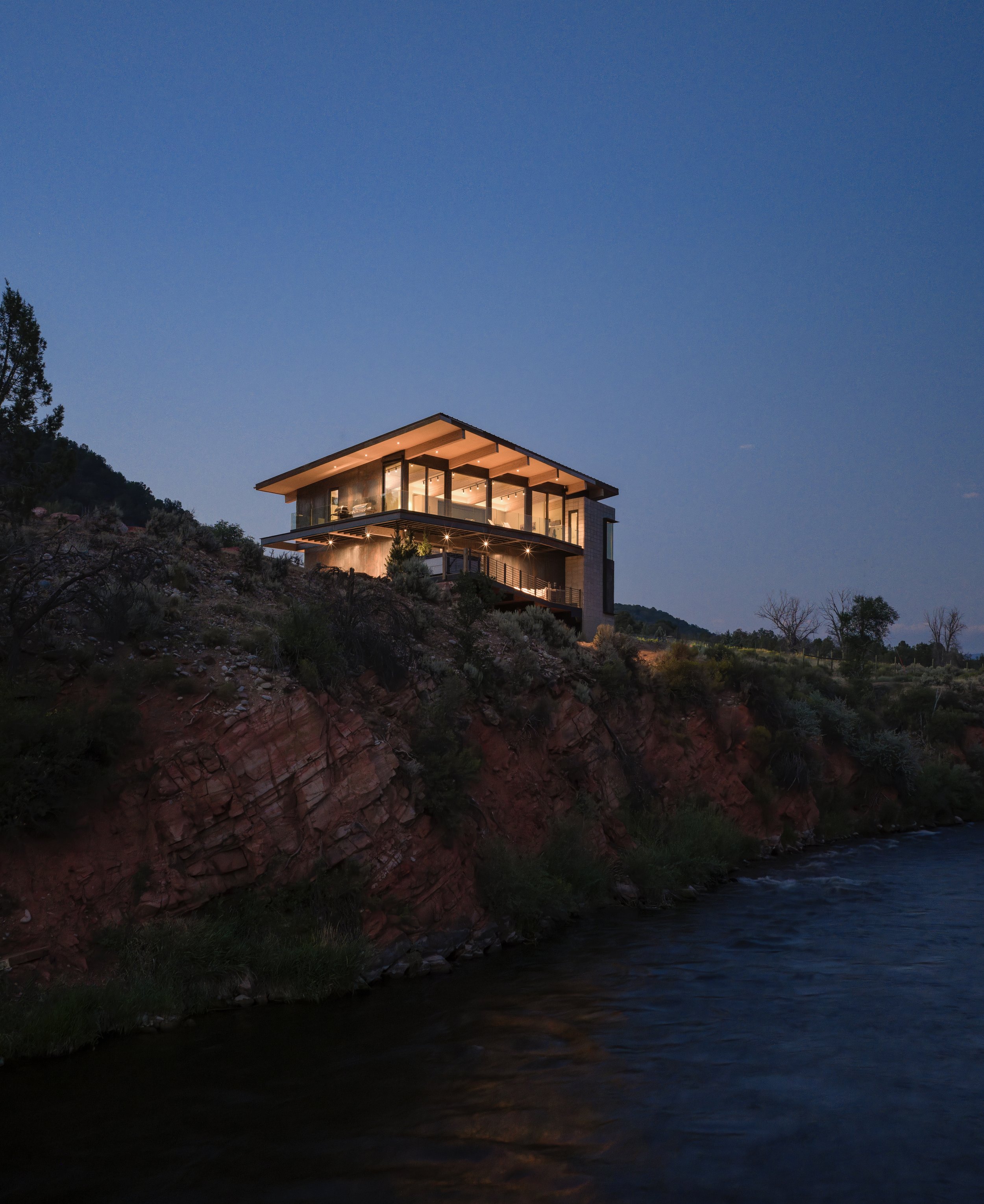
Overlook Residence in Roaring Fork Valley
On a site once deemed “unbuildable” above Colorado’s Roaring Fork River, Bilo Buck Architects and RAM Development craft a compact live–work residence that proves resourceful design can unlock extraordinary places for locals, not just for luxury buyers.
An “Unbuildable” Site Above the River
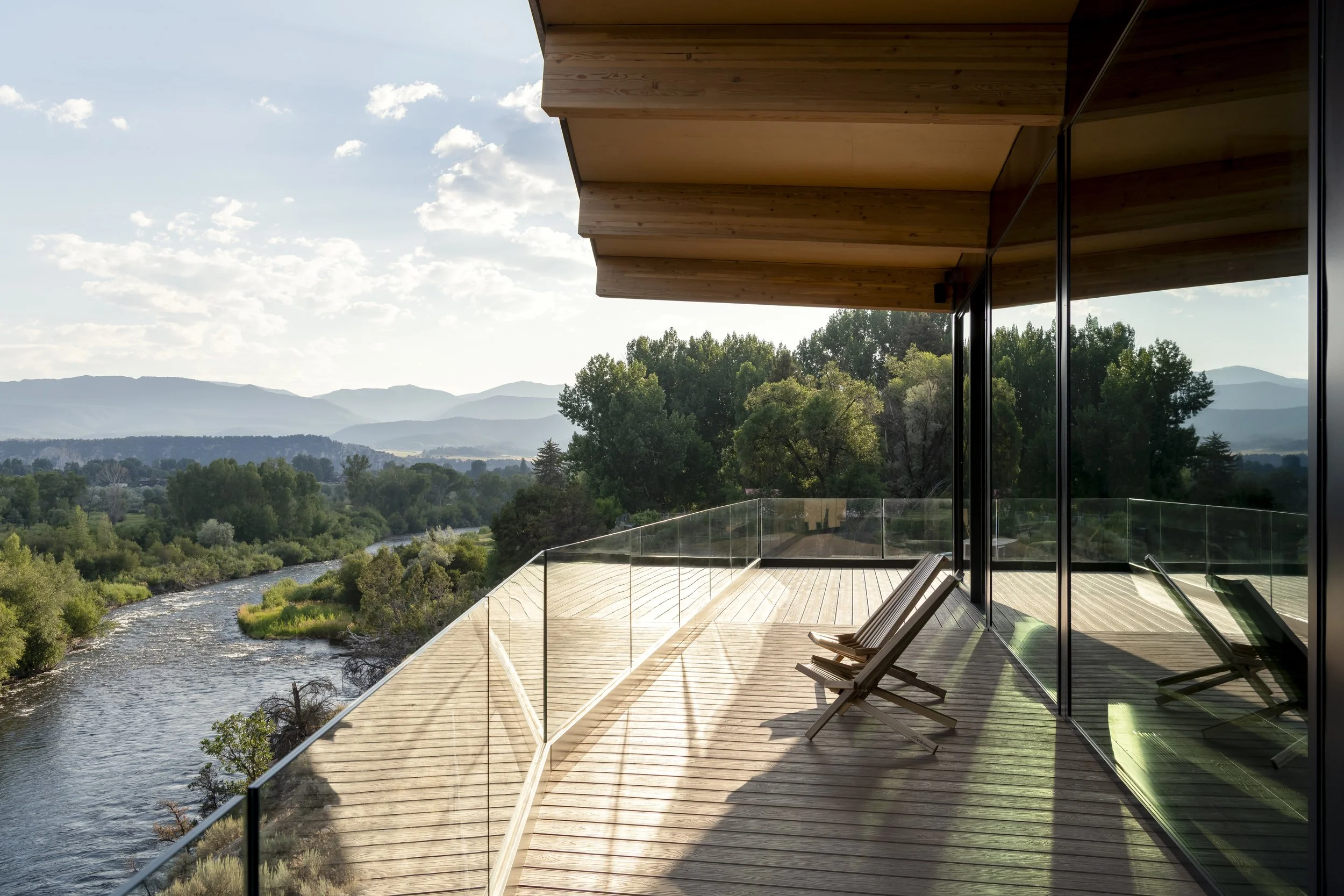
In Carbondale, Colorado, within the coveted Roaring Fork Valley, real estate and construction costs have pushed many locals to the edges of the market. Overlook Residence was conceived as a direct response to that reality — a way to claim a home, workshop, and daily life in a landscape often reserved for second homes and weekend retreats.
The project sits on a parcel long dismissed as “unbuildable.” Squeezed between a required setback from the access road and a high-water-mark setback from the Roaring Fork River, the allowable building area was essentially erased by overlapping constraints. On paper, there was no room left to build.
Rather than walking away, the team treated those constraints as a design challenge.
Turning Regulations into Design Lines
The project grew from a longtime friendship between architect and builder - ski partners turned collaborators - who decided to test how far resourceful design and a precise approvals strategy could go
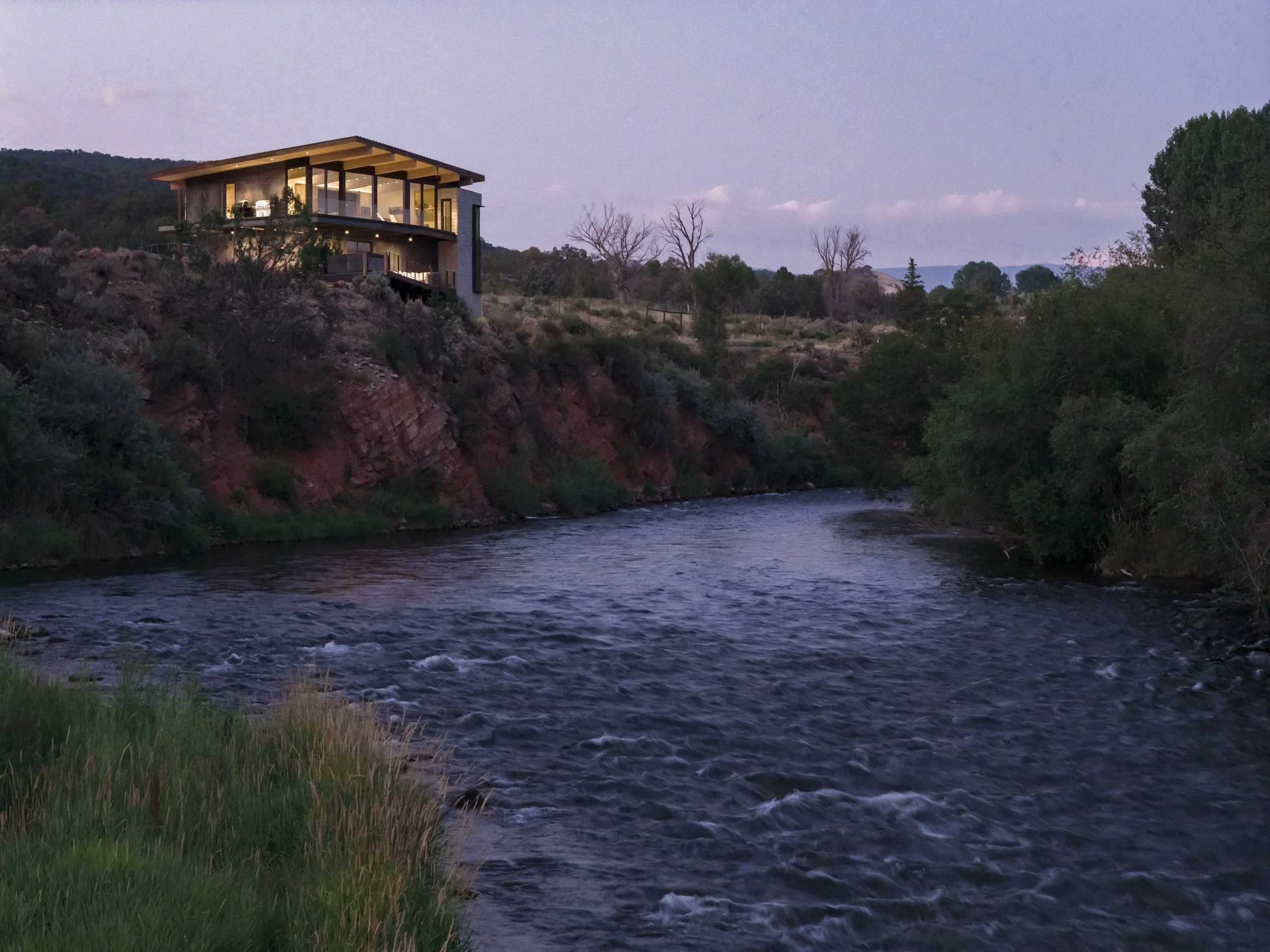
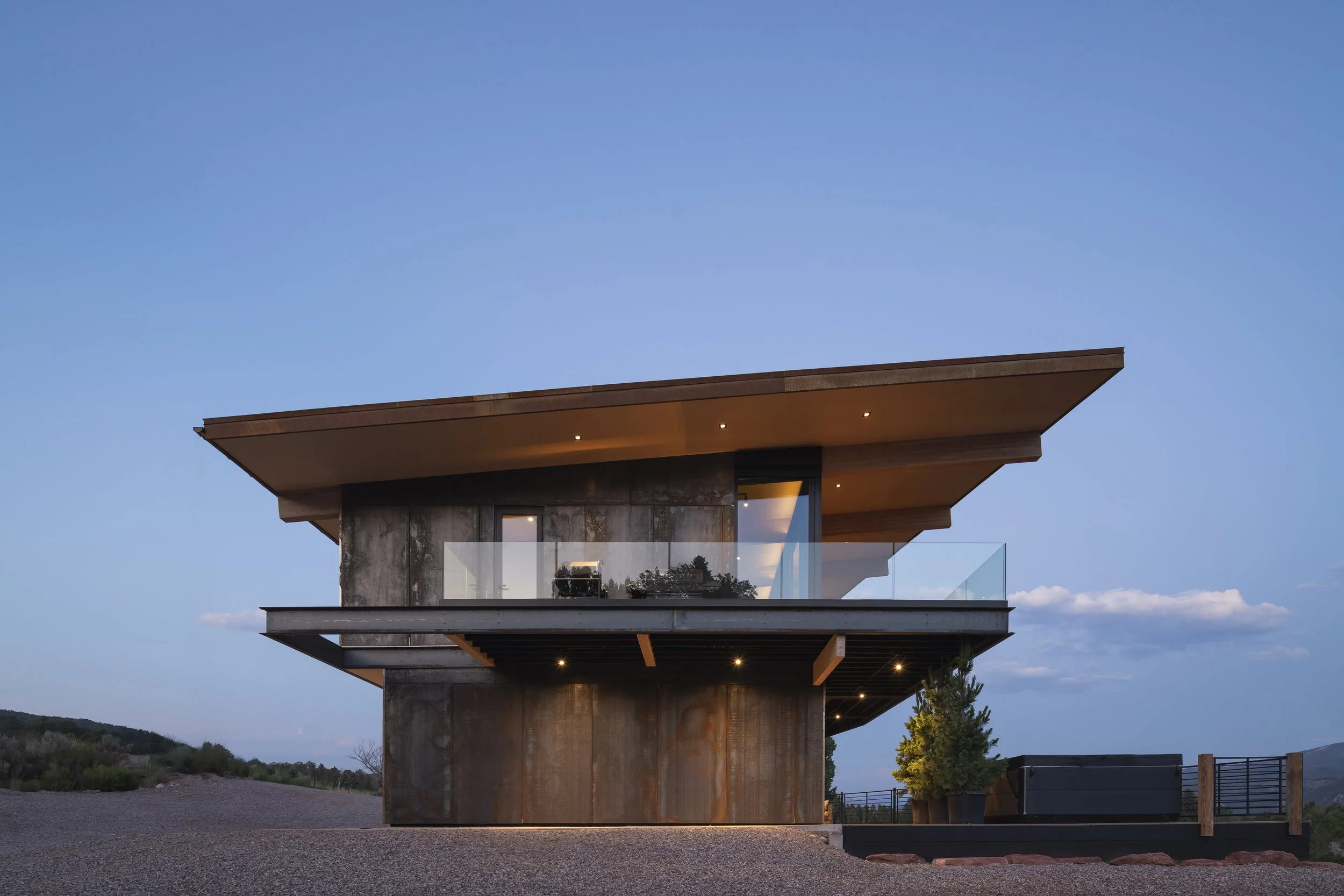
Through a targeted and carefully reasoned variance process, they secured relief from the road setback, carving out just enough space for a viable footprint. From there, every centimetre mattered. The residence sits at the edge of the river’s precipice, and its rooflines and decks are literally shaped by the geometry of the high-water setback.
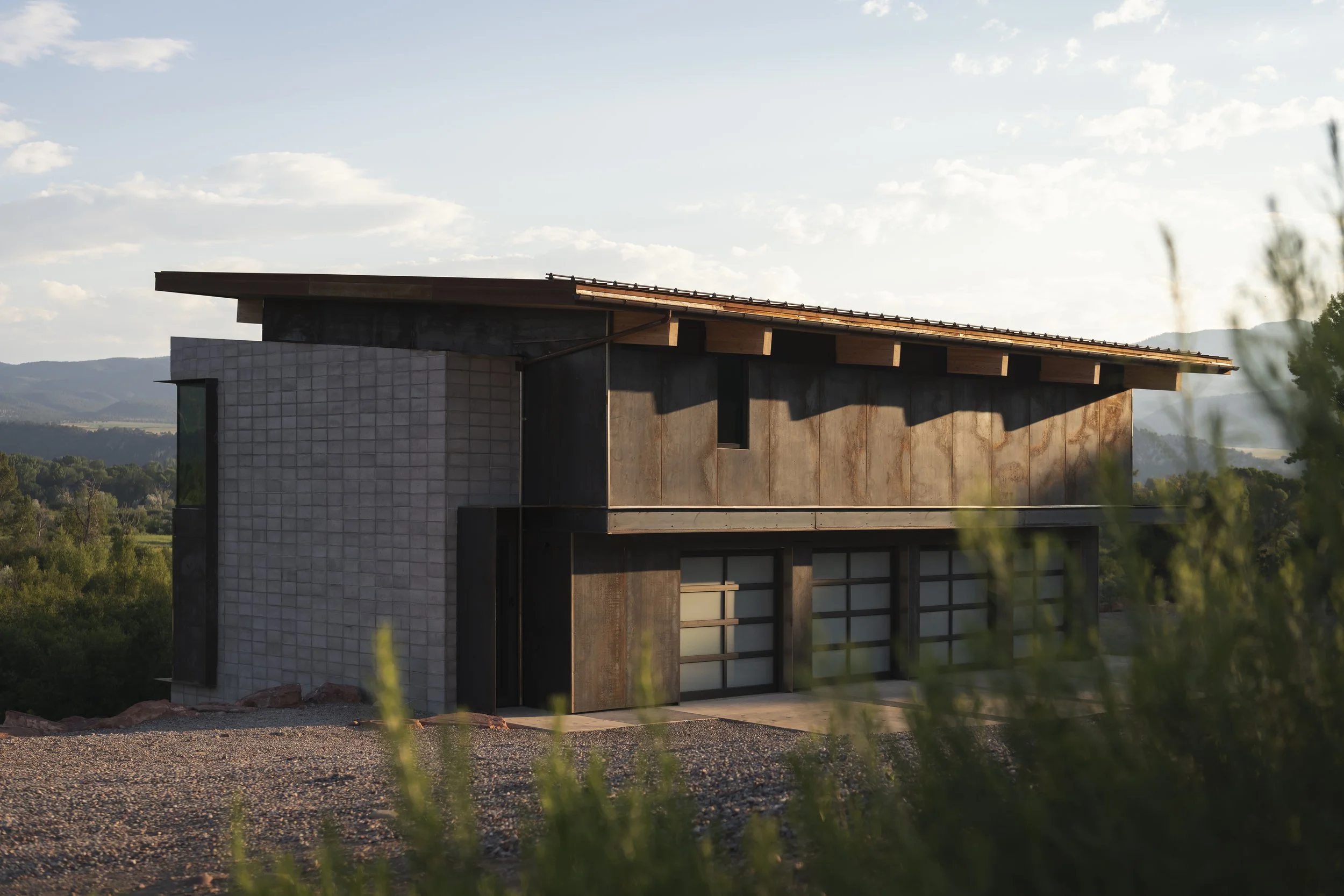
Lines that are usually invisible - regulatory offsets and no-build zones - became active design drivers. They generated the residence’s distinctive angular silhouette and the way it steps with the terrain.
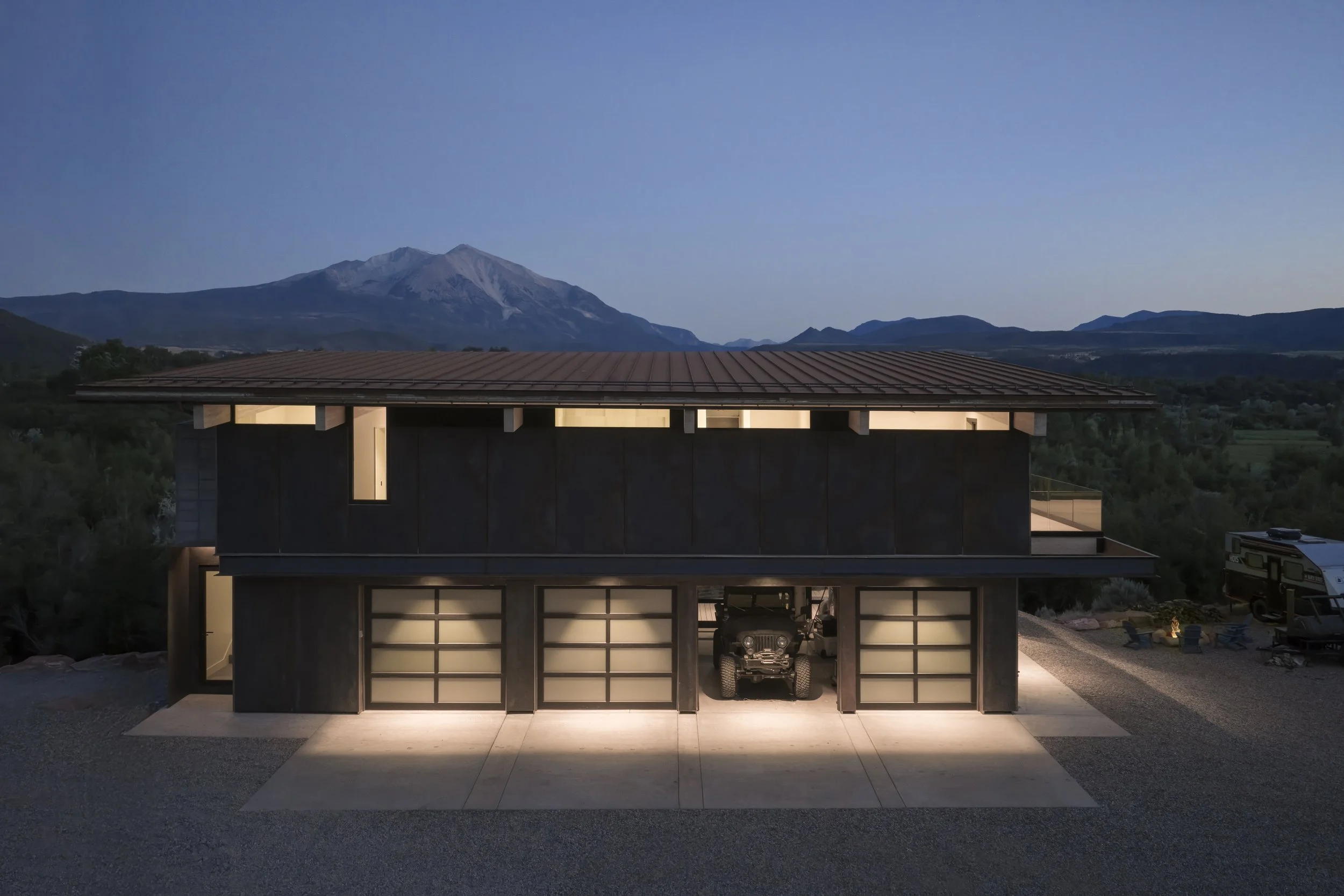
The result is a compact, efficient building:
1,450 sq ft workshop and garage at the lower level
1,400 sq ft residence above
for a total of 2,850 sq ft of highly purposeful space.
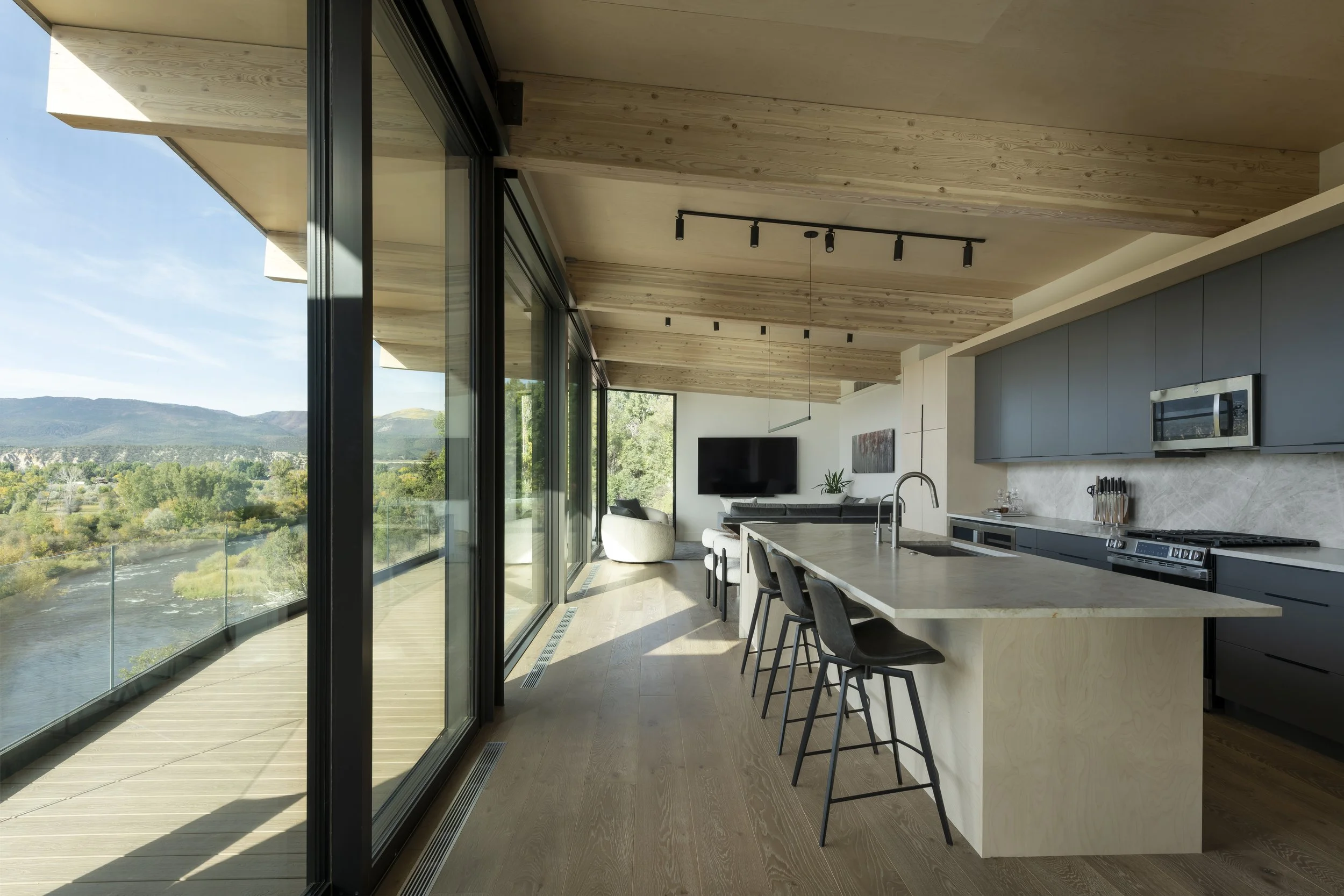
Living Above the Workshop
Lifting the home above the workshop was both a spatial and an economic decision. By stacking functions, the design:
Preserves a small footprint on the site
Maximises views over the Roaring Fork River and surrounding valley
Keeps the workshop directly connected to the landscape and access road
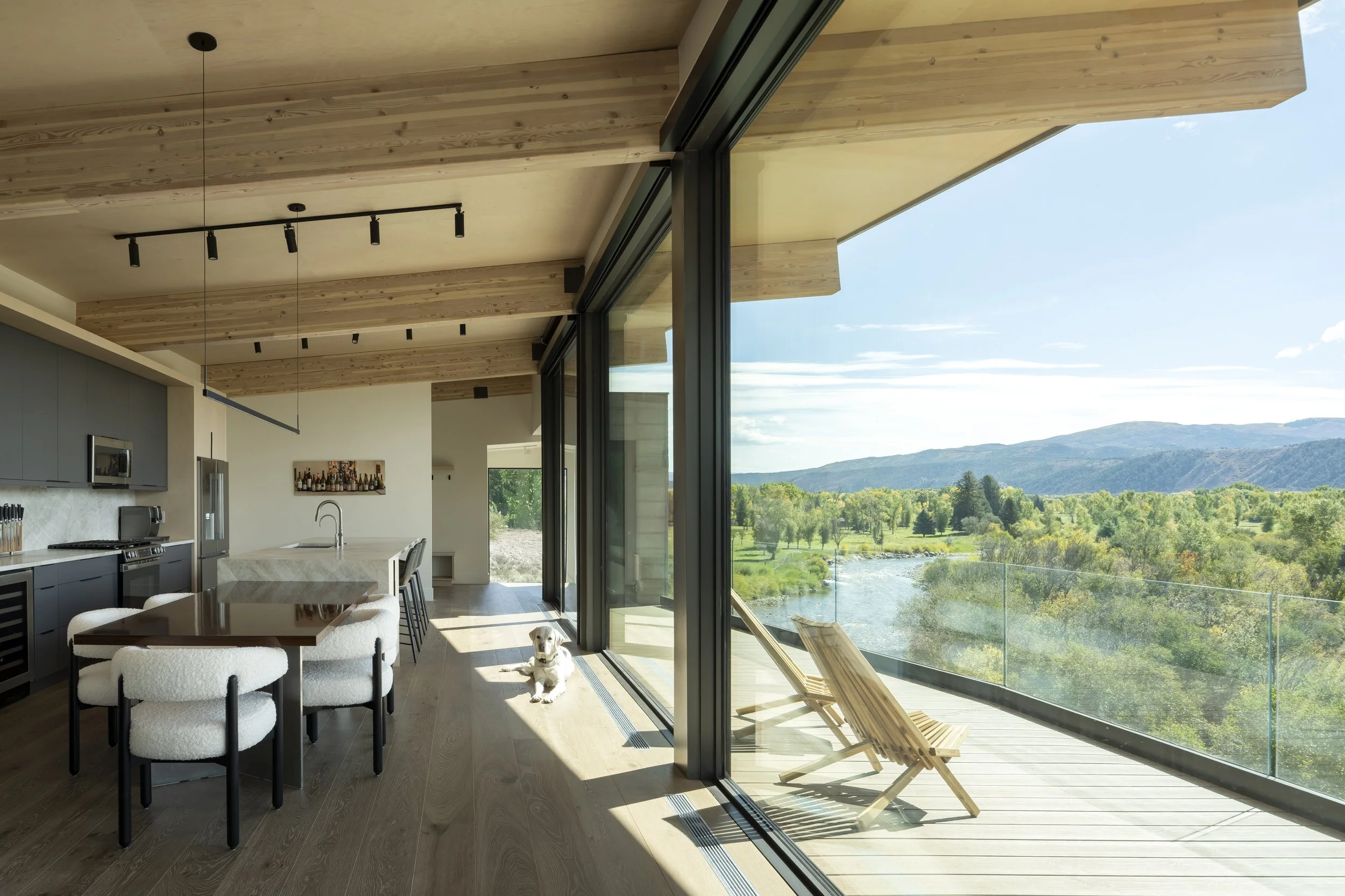
The lower level belongs to making and maintenance: a generous workshop for a local craftsman, with enough space for tools, storage and seasonal gear. Above, the living spaces open to expansive mountain and valley views, turning daily routines - cooking, reading, resting - into moments of quiet outlook.
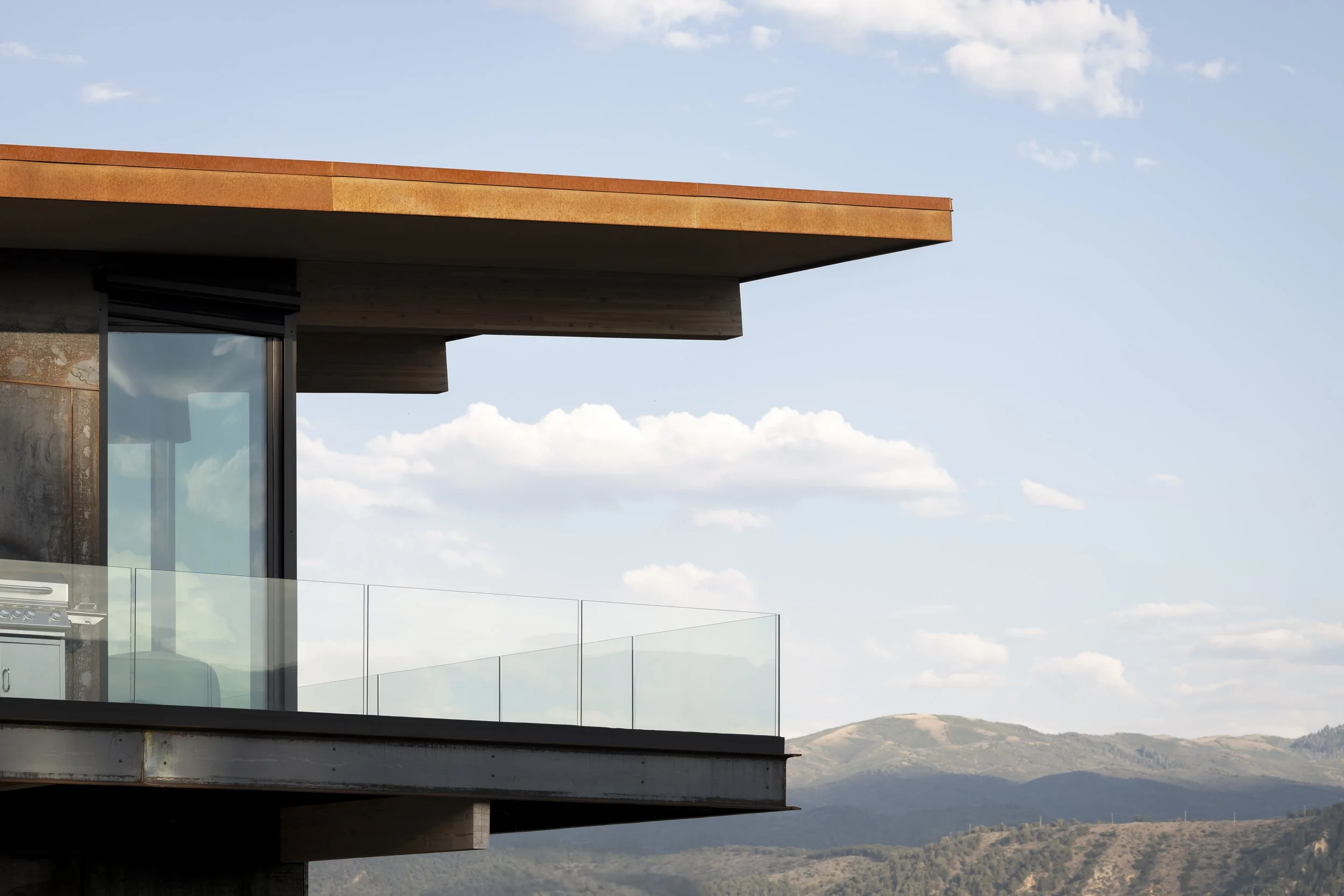
This vertical organisation supports exactly what the team set out to prove: that someone who works with their hands can live, work and play in the same valley where they build for others.
Resourceful Design in an Exclusive Landscape
Overlook Residence is not about excess; it is about precision. Every move — from the building’s placement within the setback envelope to the shaping of roof edges and decks — is calibrated to get the most from a modest budget and a tight site.
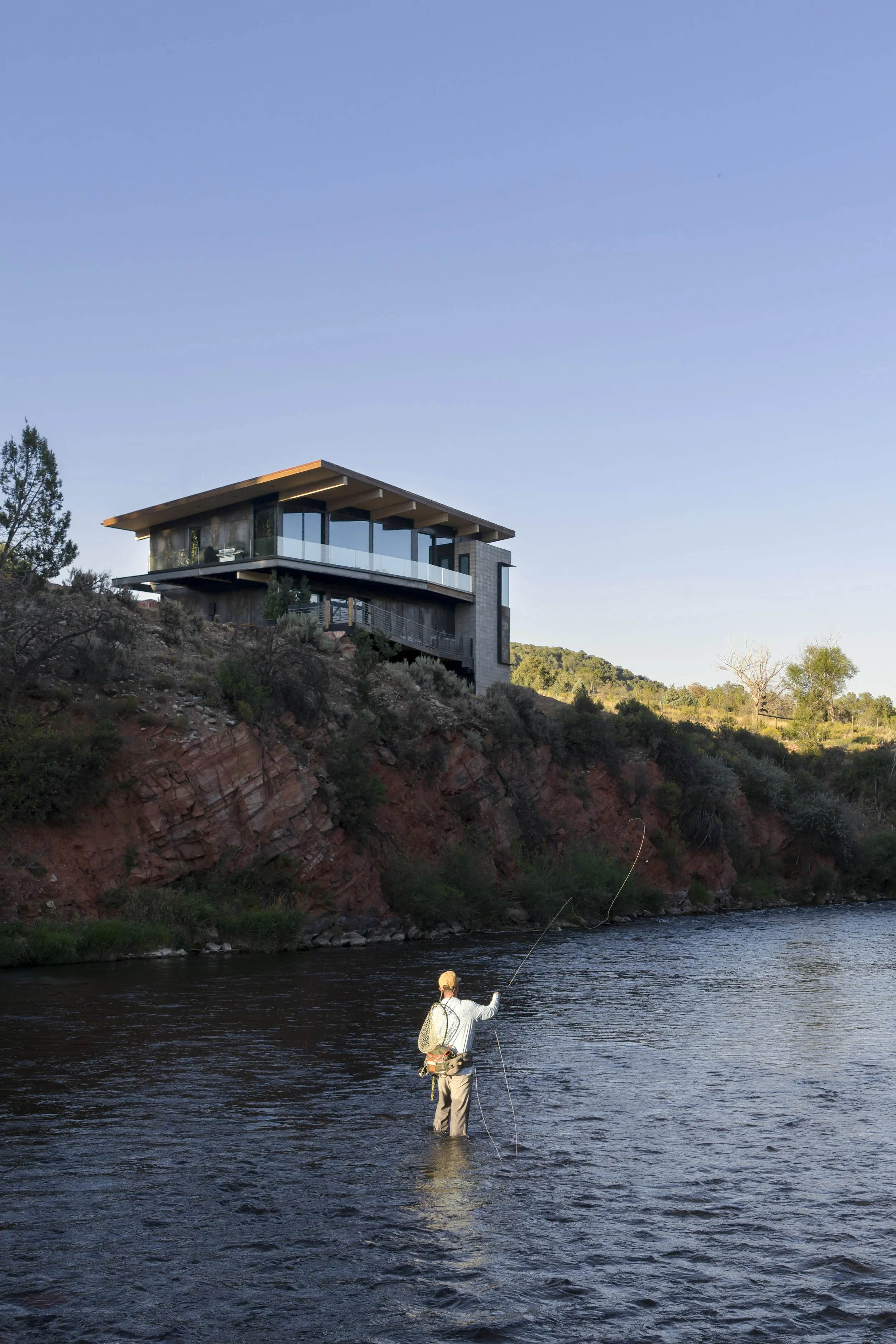
In a region dominated by high-end second homes, the project offers a different narrative:
That local craftspeople can still build a life in the places where they practice.
That smart negotiation with constraints - regulatory, financial, topographic - can unlock sites previously written off.
That good architecture in a remarkable landscape does not have to be monumental to be meaningful.
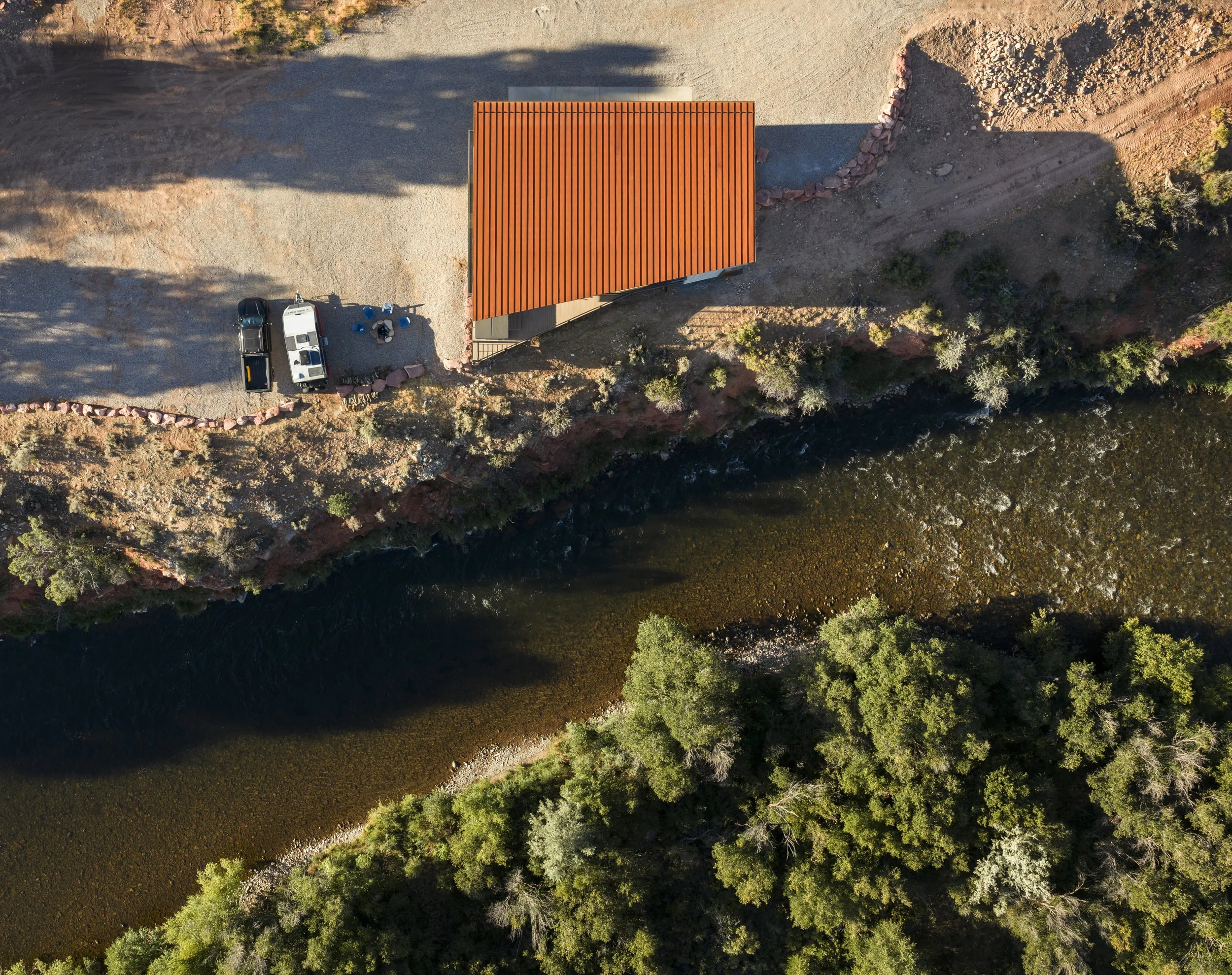
For Bilo Buck Architects and RAM Development, Overlook Residence is both a home and a proof of concept: a demonstration that design intelligence can expand what is possible for those who are usually pushed to the margins of exclusive markets.
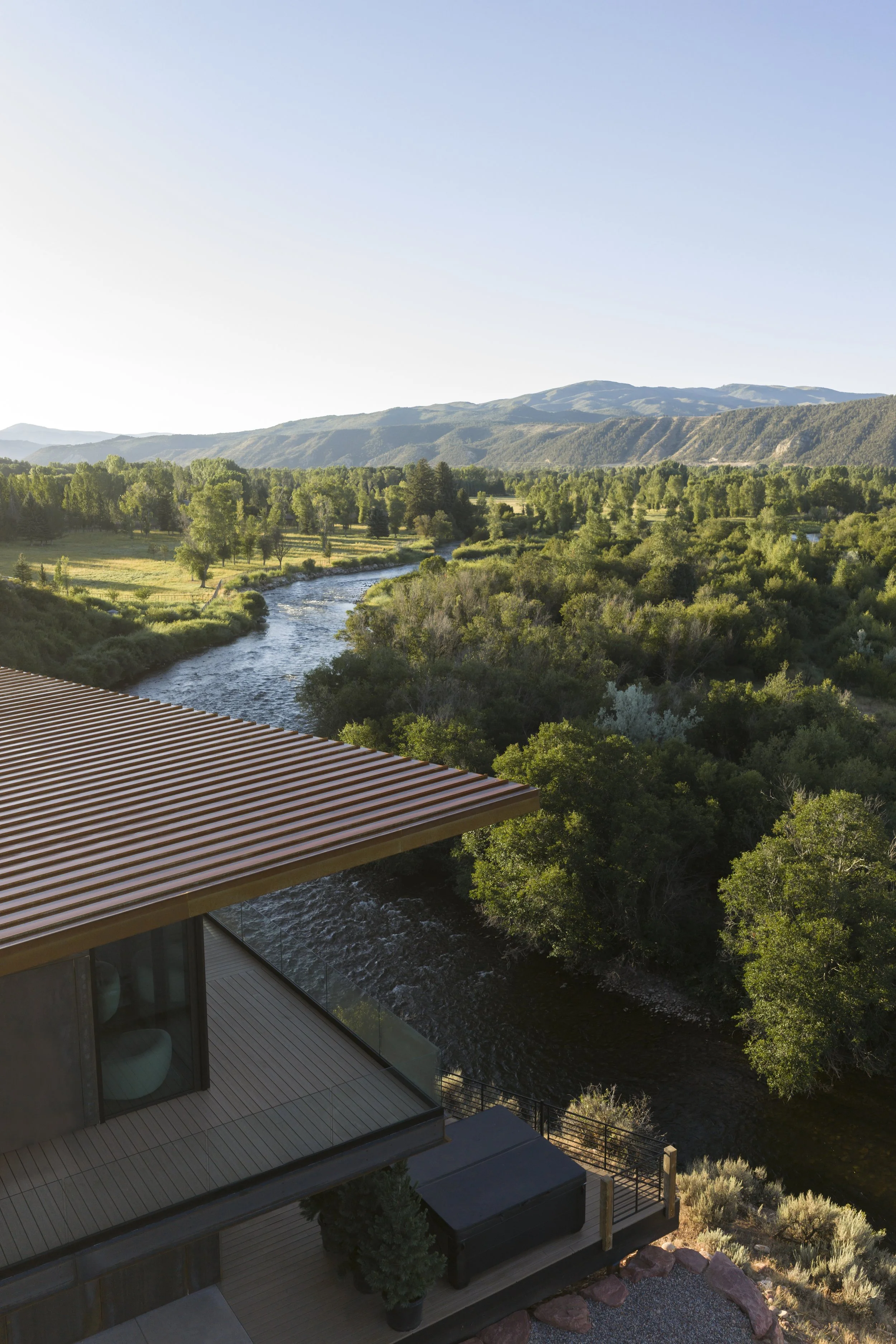
Project credits
Architect: Bilo Buck Architects
Builder: Bobby Almazan, RAM Development
Photographer: Brandon Huttenlocher
Location: Carbondale, Colorado – Roaring Fork Valley, USA
Total area: 2,850 sq ft (1,450 sq ft workshop + 1,400 sq ft residence)