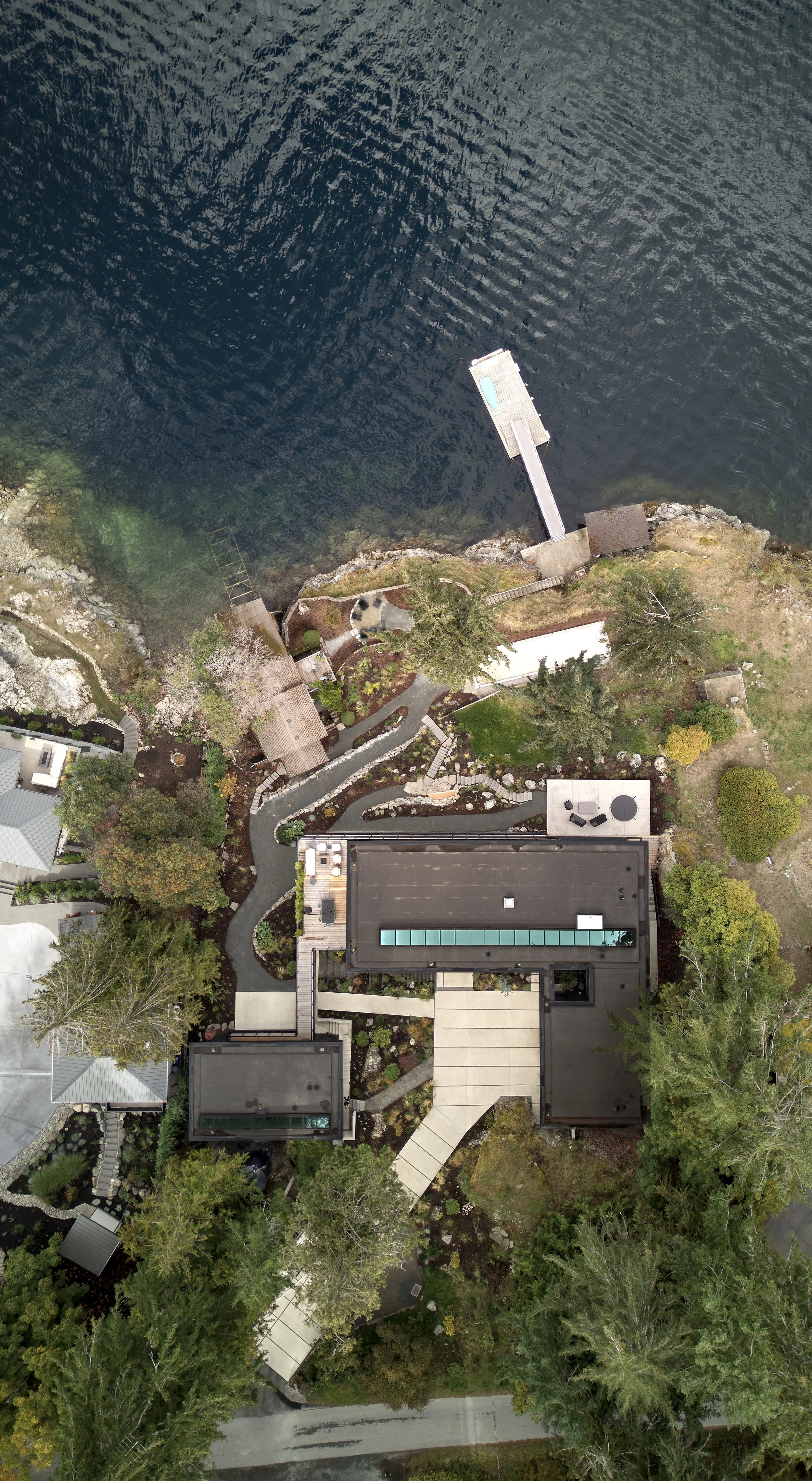
Layer House: A Waterfront Retreat for Living and Making
In British Columbia, Layer House is conceived as a waterfront retreat for living and making — a home where forest, water, craft and quiet observation shape everyday life.
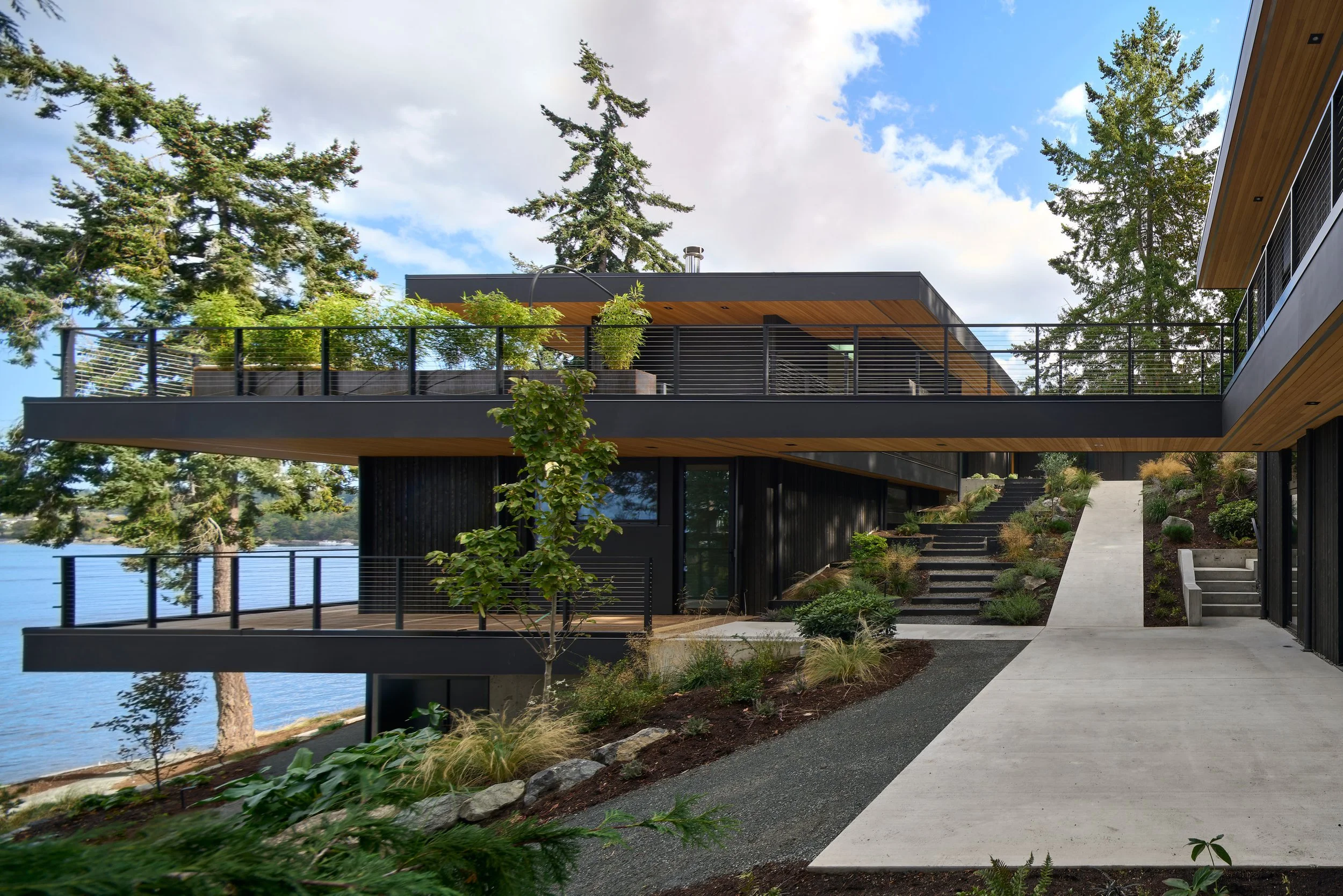
Set above the waters of Saanich Inlet in Willis Point, British Columbia, Layer House is conceived as both refuge and observatory — a home where daily life unfolds in close dialogue with forest, water and light.
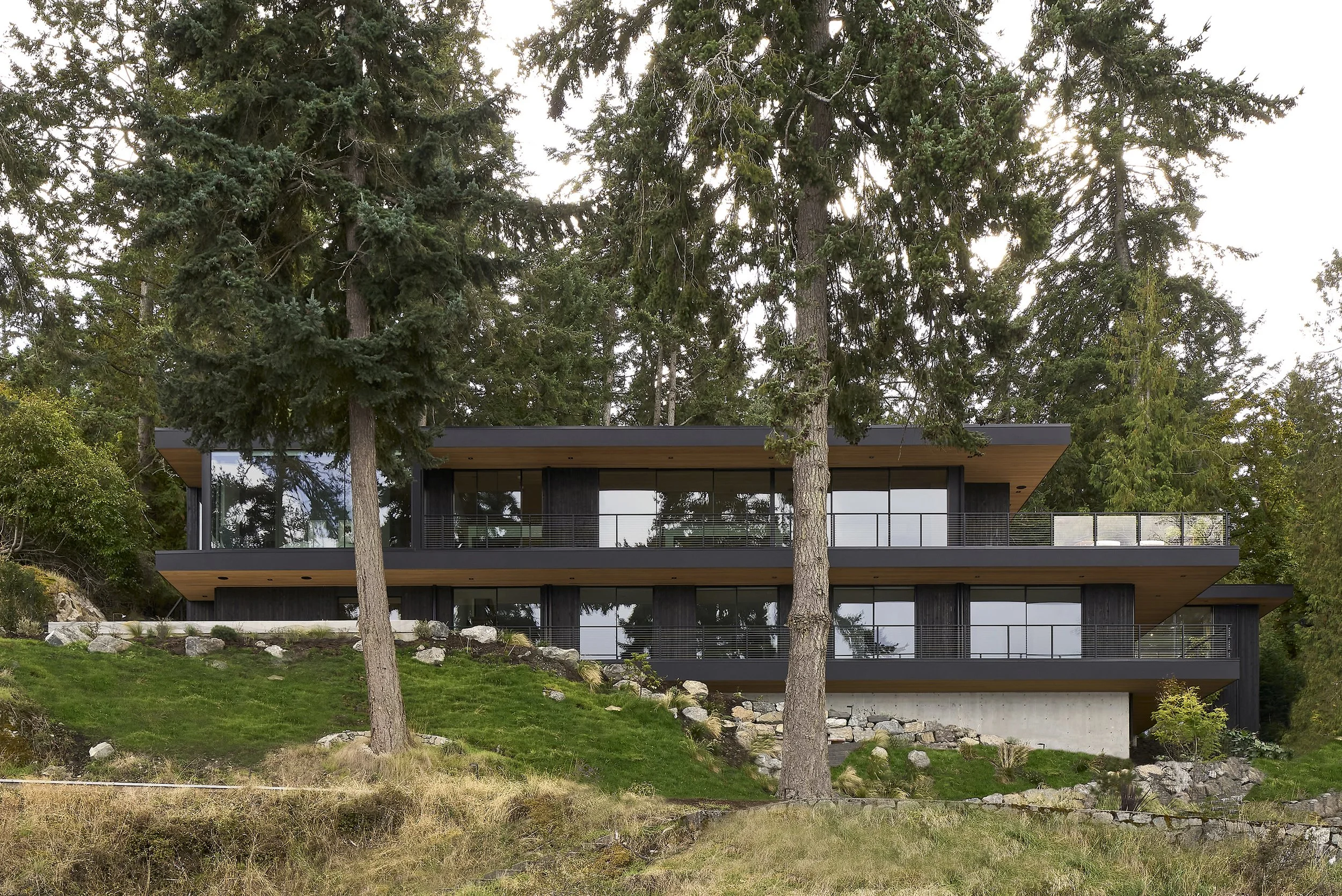
Designed for a visual artist and a craftsperson, the project balances intimacy with openness, creating a domestic environment that supports retreat, creativity and connection. Perched on a wooded slope, the residence looks quietly outward, observing the shifting atmosphere of the inlet and the slow movement of marine traffic below.
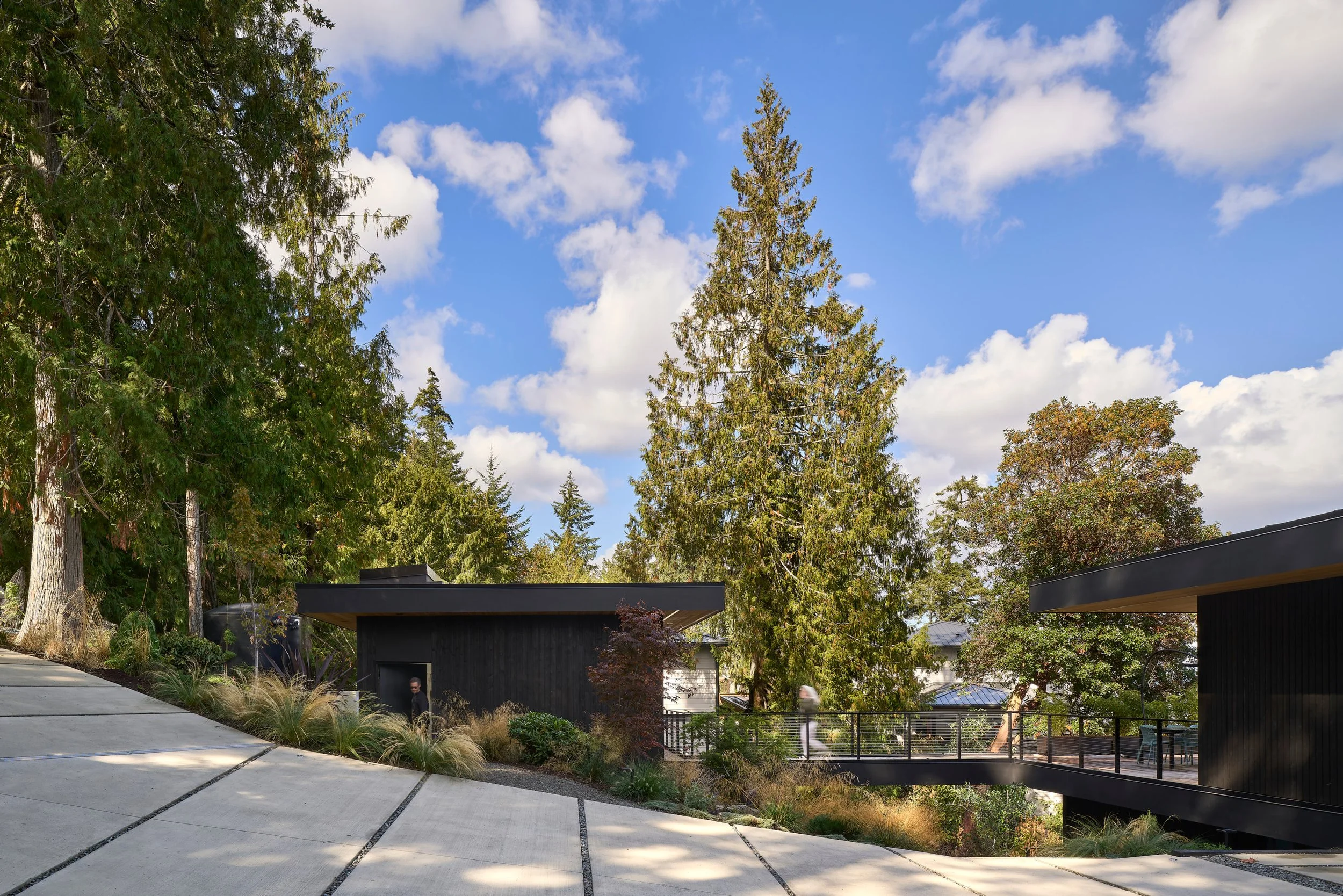
The home extends across 5,100 square feet on two levels, accompanied by a 1,300-square-foot accessory building connected by a bridge. This secondary structure houses the clients’ creative workspaces — a print-making studio above and a woodshop below — allowing making and living to remain distinct yet fully connected within the same landscape experience.
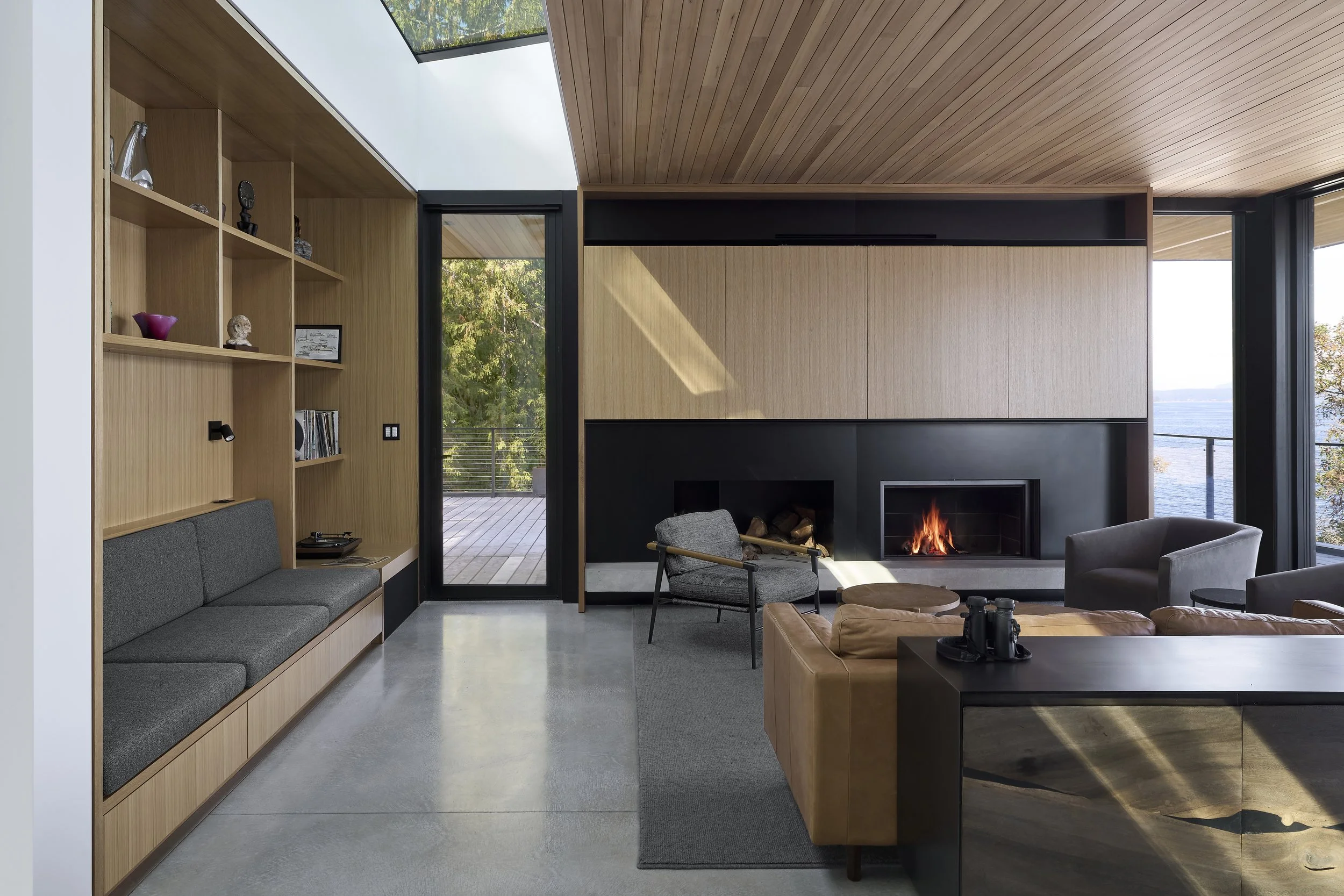
Throughout the house, expansive glazing draws the outside inward. Forest, sky and water become part of everyday life, while natural materials ground the architecture in its surroundings. The primary bedroom, living and dining areas are oriented toward broad views of the inlet, offering a continuous sense of immersion. Below, guest rooms, an office, gym and sauna open onto wraparound decks and an outdoor terrace with a hot tub and shower, shaping spaces for restoration and quiet reflection.
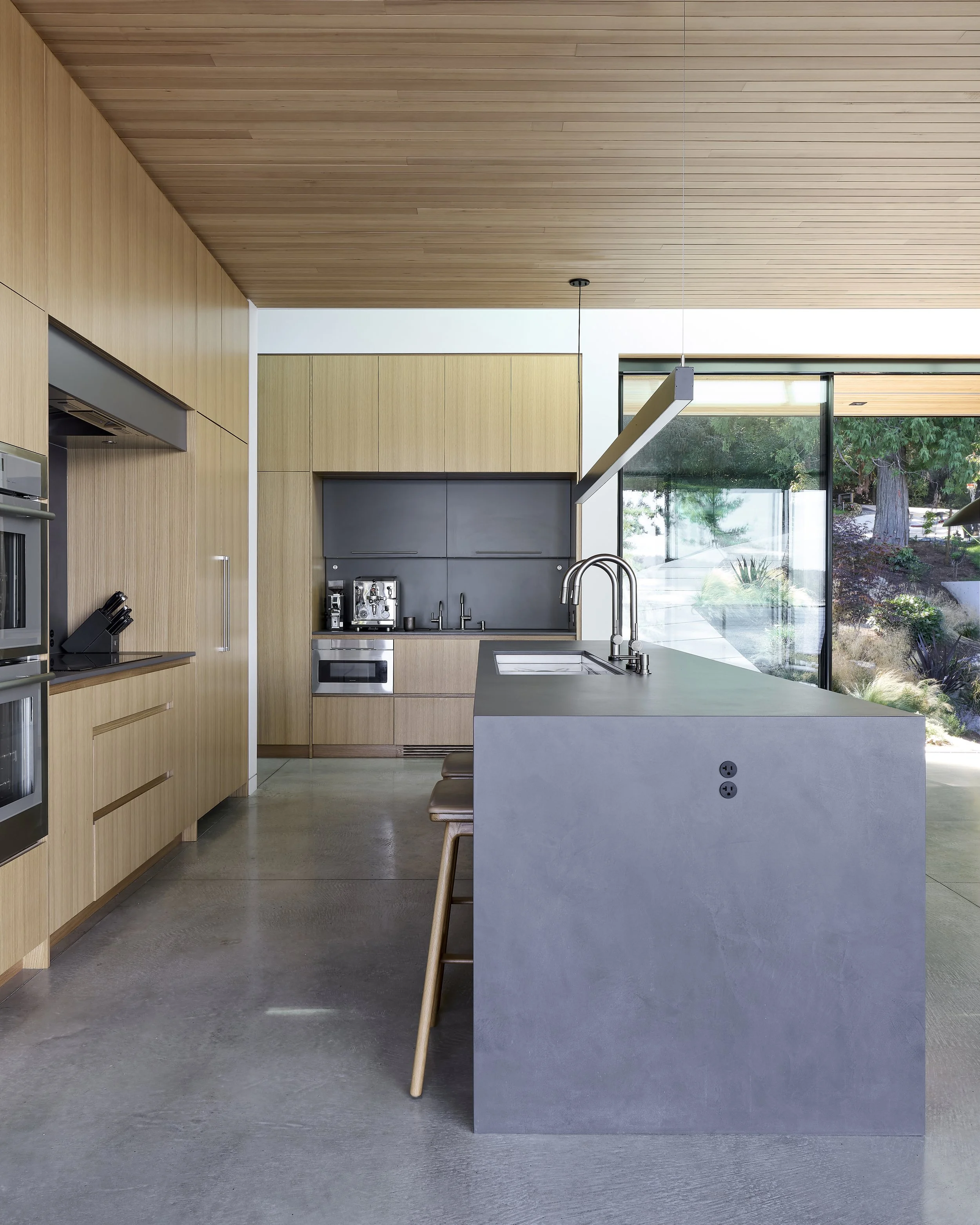
What gives Layer House its particular depth is the way it treats creativity as inseparable from dwelling. The accessory building is not an afterthought, but an extension of the project’s larger rhythm — a place where artistic work unfolds in direct relationship with the same landscape that shapes the domestic spaces. Architecture, craft and environment are allowed to move together as part of one daily ritual.
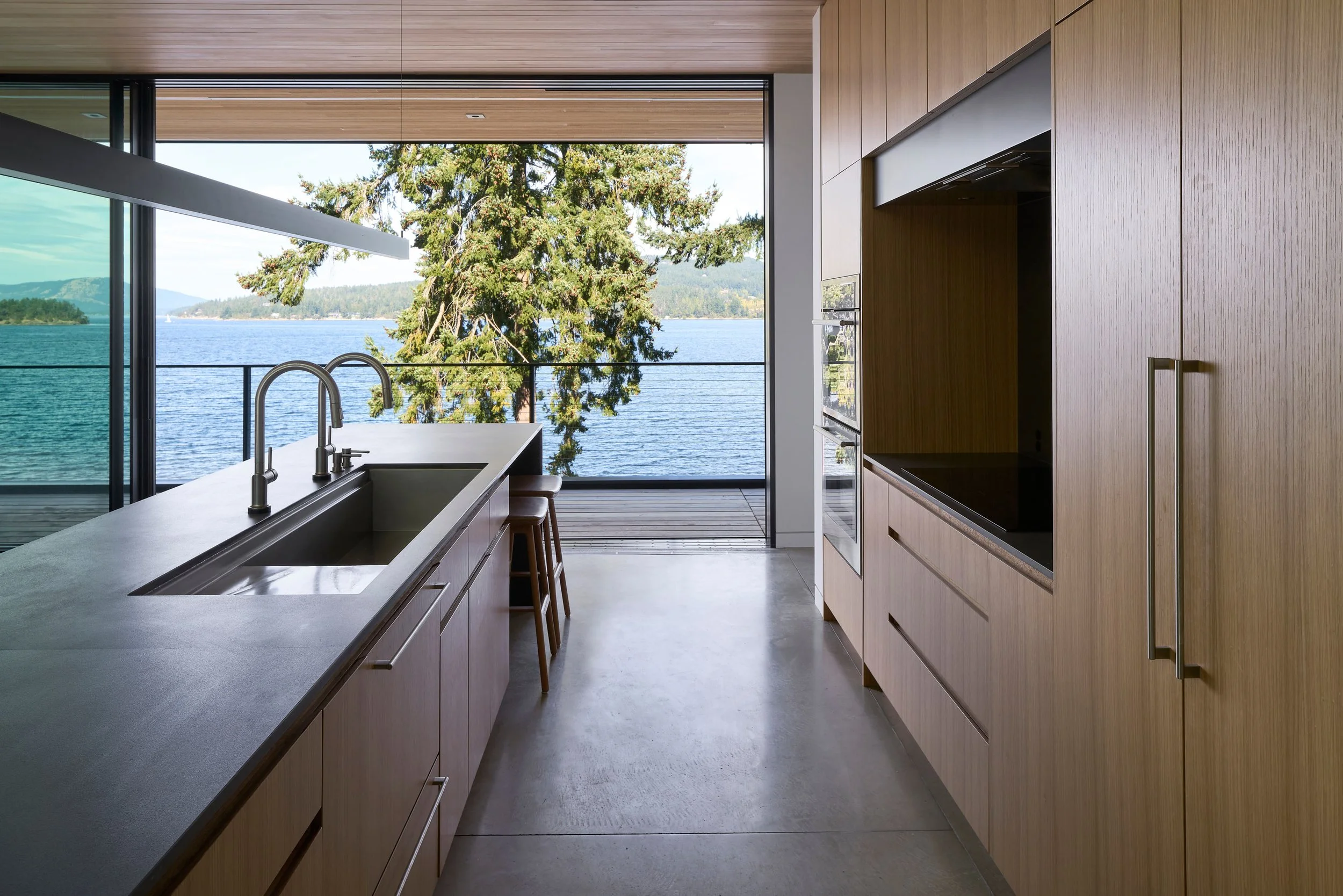
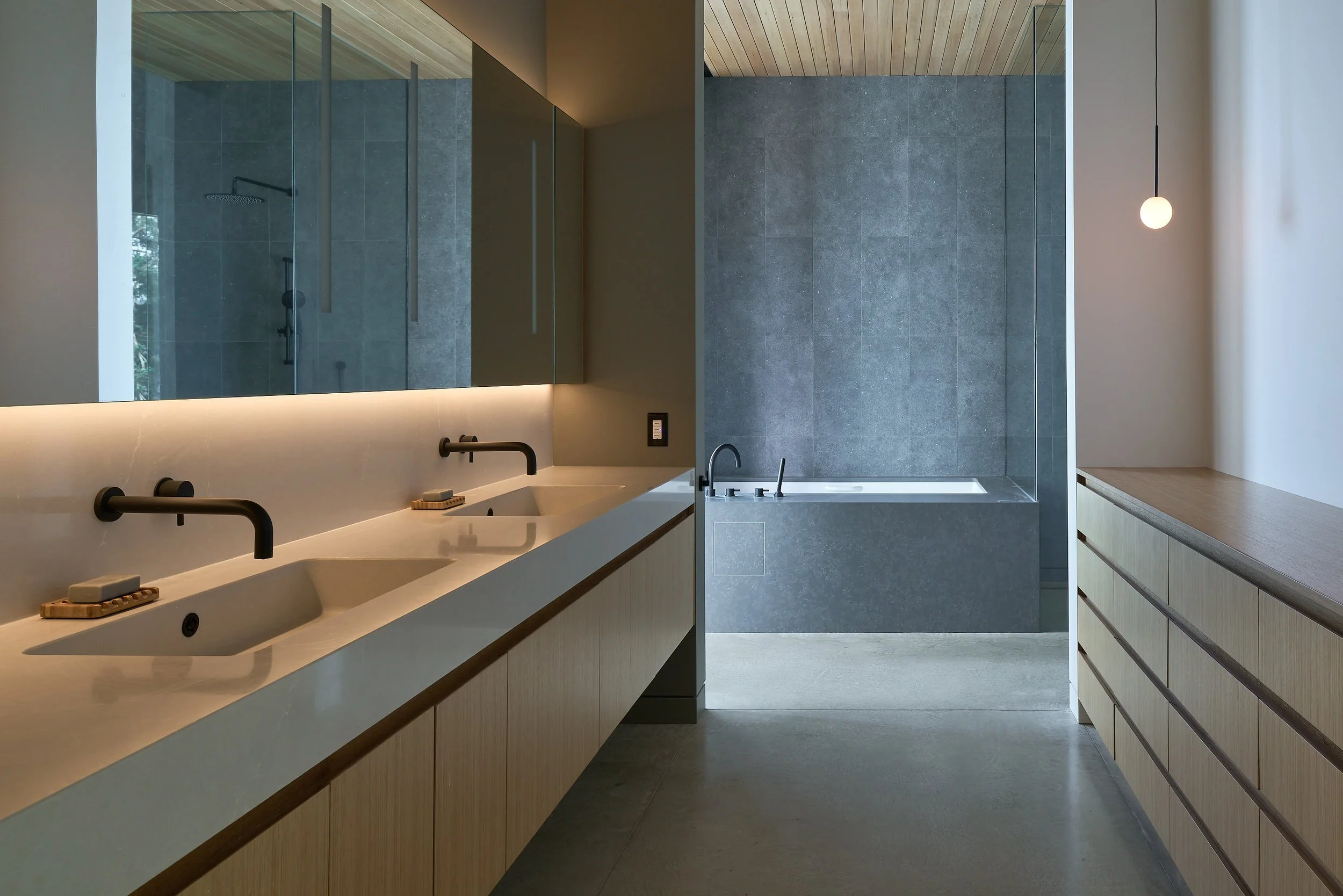
Sustainability is embedded in that logic. Set into the hillside, the structure benefits from the earth’s stable thermal mass, improving comfort and energy efficiency throughout the year. High-performance glazing, thermally broken doors and well-insulated assemblies reduce heat loss while maximizing natural light and passive solar gain. A rainwater harvesting system collects and filters roof runoff for irrigation and non-potable use, while durable, low-maintenance materials — including locally sourced wood, concrete and metal — support longevity and allow the house to age quietly within its setting.
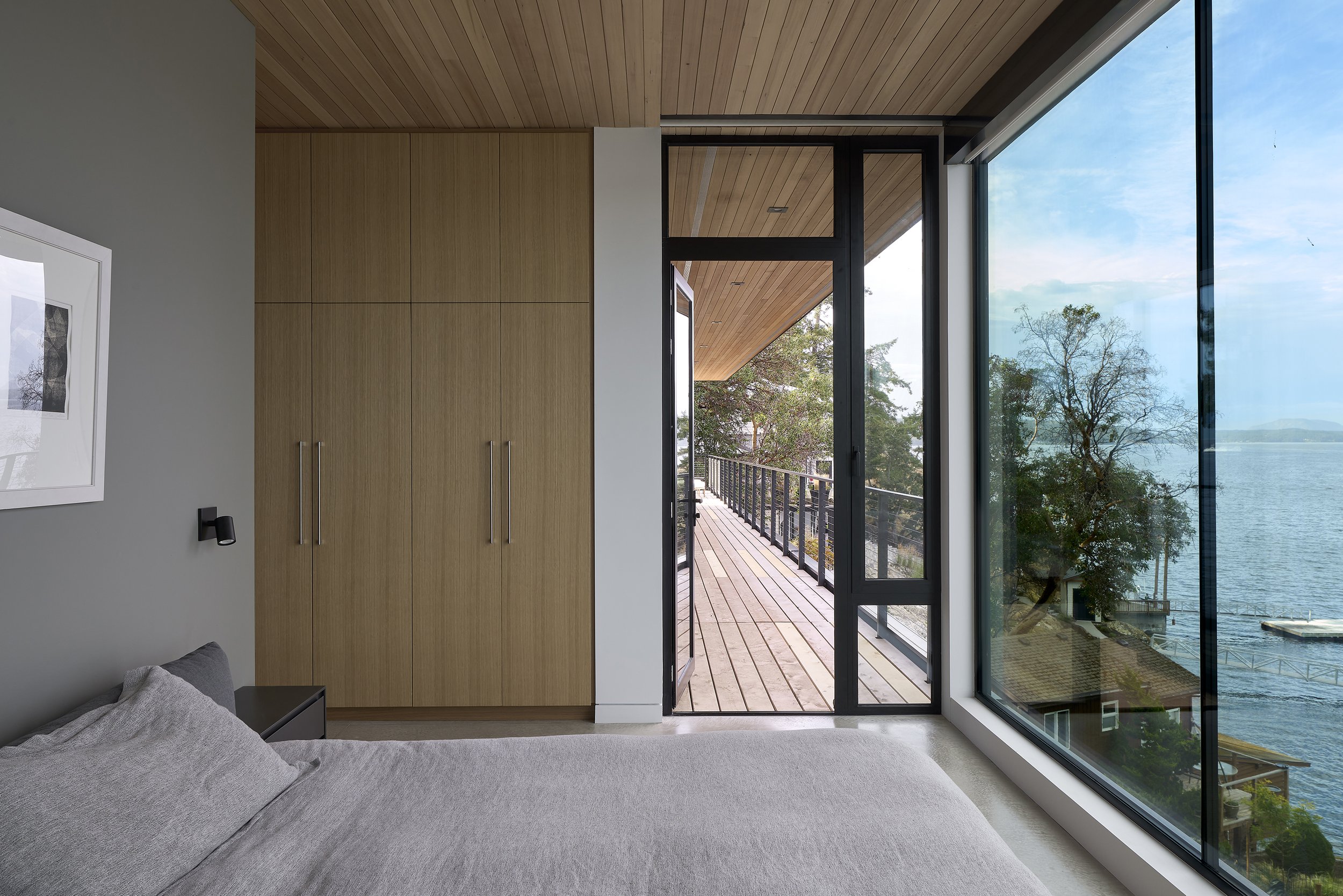
More than a waterfront residence, Layer House becomes a place for inhabiting landscape through attention. It is a home for living and making, where retreat is not separation from the world, but a deeper way of observing it.
Credits
Architecture: Woven Architecture and Design
Builder: Citta Group
Engineering: Workshop Engineers
Photography: SilentSama Architectural Photography