
From Day Care to Domestic Landscape
In Luxembourg City, a 1950s corner house once converted into a day care centre is transformed back into a domestic landscape — reconnecting family life, interior space and garden through a stepped architectural sequence.
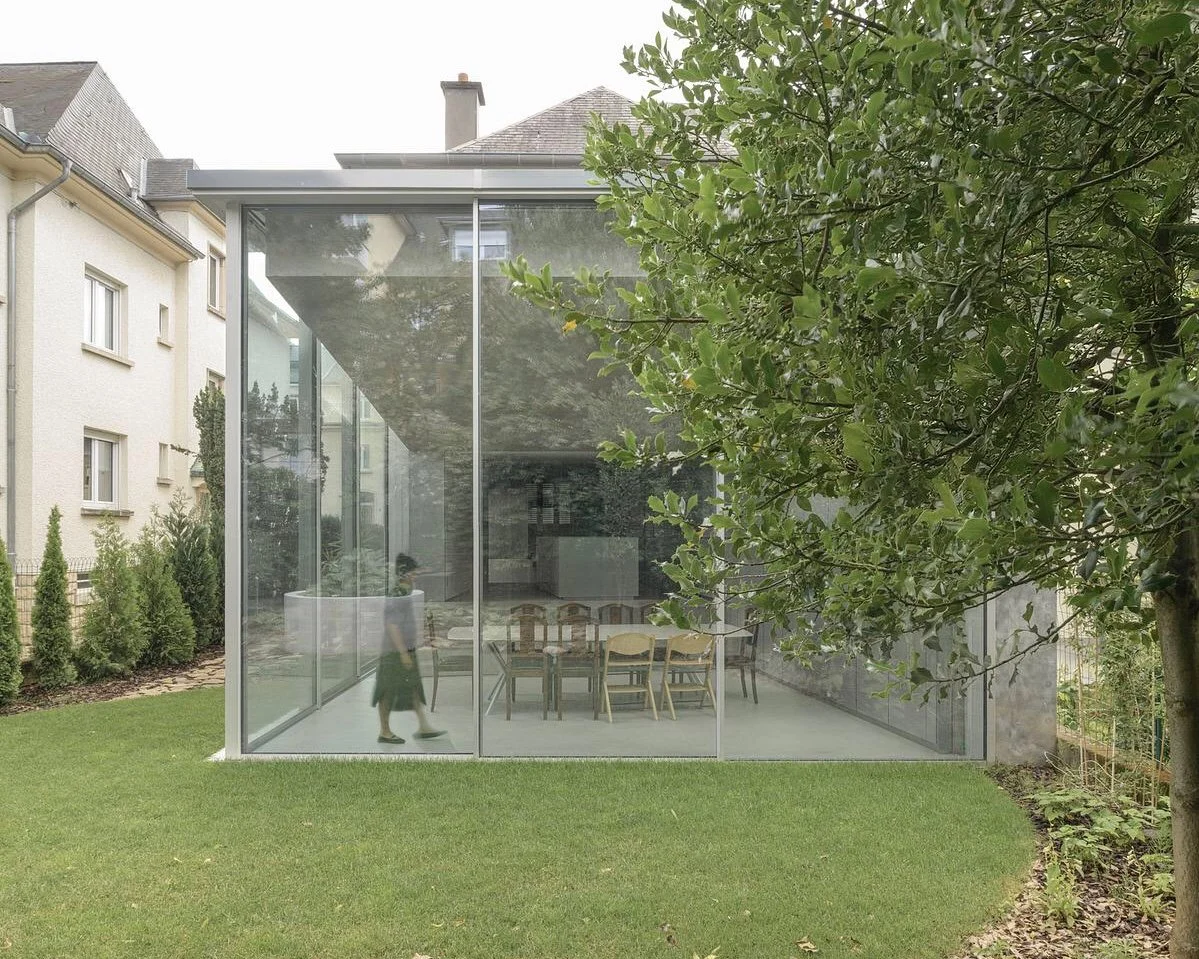
On a quiet street in Luxembourg City, a corner house from 1957 stood suspended between two lives. Originally conceived as a family home, it had later been converted into a children’s day care centre, leaving behind a fragmented interior, heavy fire doors and a garden buried beneath concrete and rubber safety flooring. In the name of regulation, the post-war house had been stripped of its domestic soul.
The new brief sought to reverse that condition. For a young woman, her children and her mother — an artist — the project was not simply a renovation, but an act of reclamation: a way to transform the grandmother’s house into a place capable of reuniting a family scattered across countries, while reconnecting the interior not only to the garden, but to the deeper landscape of the block itself.
The architectural response unfolds as both repair and reinvention. Toward the street, the intervention remains measured and restorative, gently renewing façades and interior rooms. Toward the garden, however, the house opens into a more radical transformation.
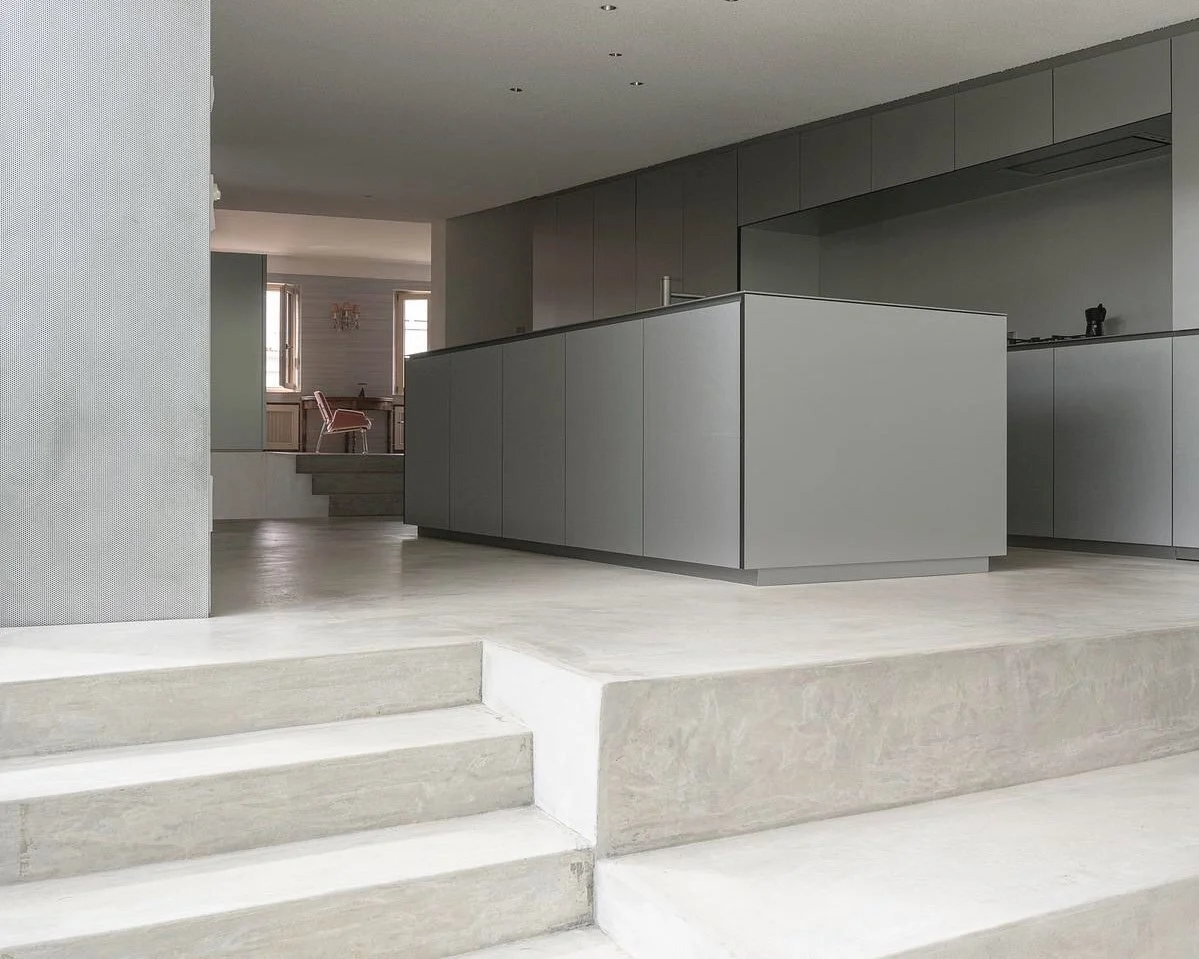
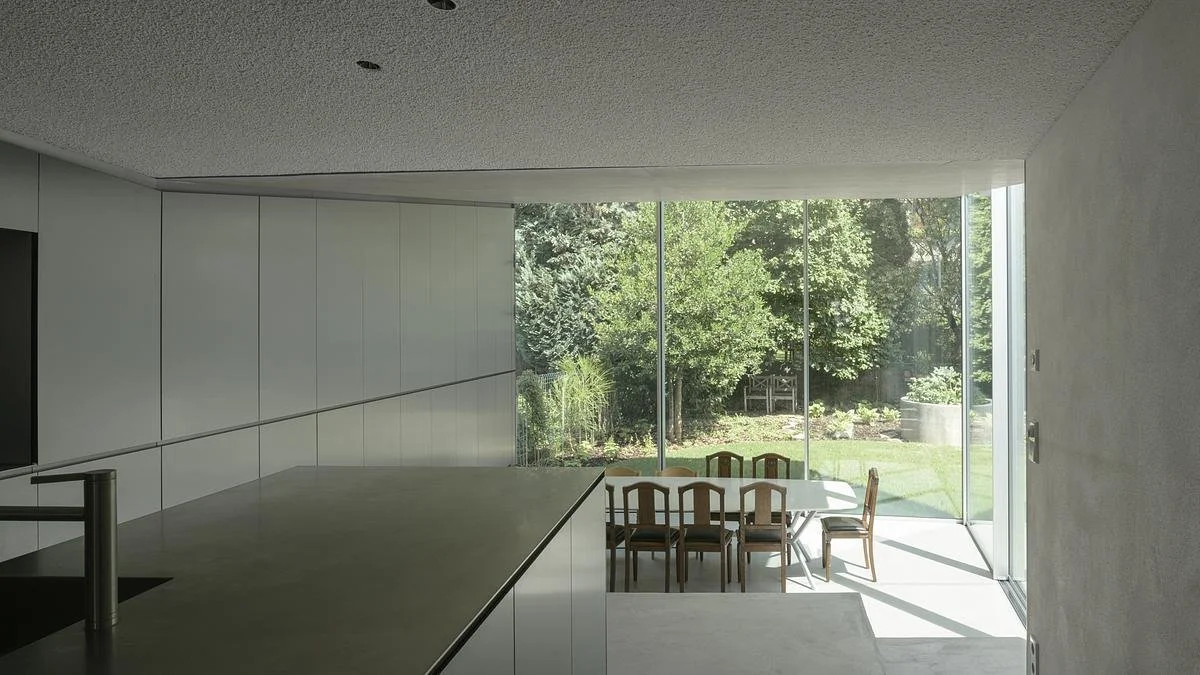
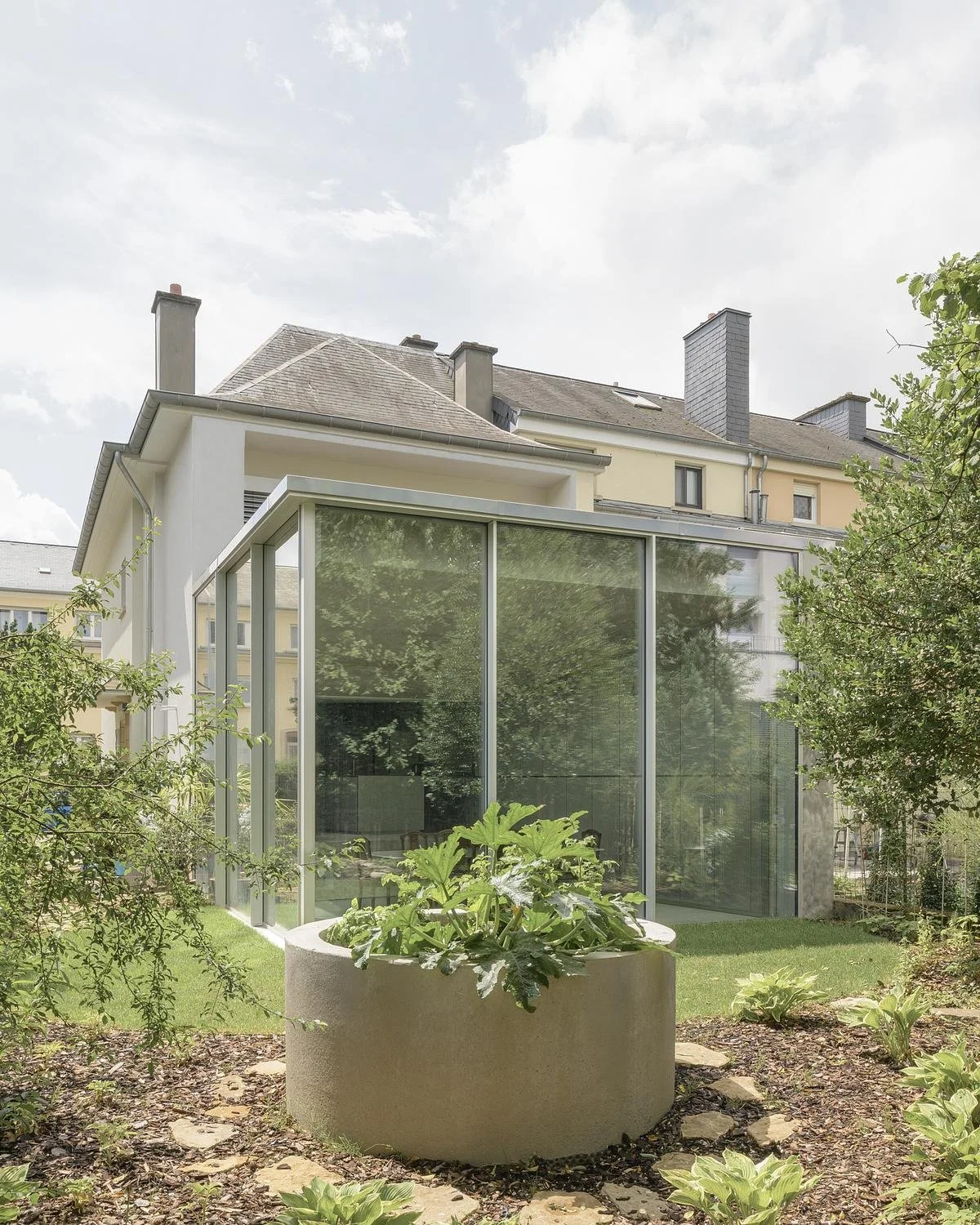
The modest terrace and winter garden were removed, along with part of the rear floor slab, making way for a simple cubic extension. Inside, the new volume is organised as a sequence of three stepped levels that descend from the living room through the kitchen and down to a dining and second living area at garden level. This progression gives the house a new spatial rhythm, one in which movement, light and domestic life become more fluid and interconnected.
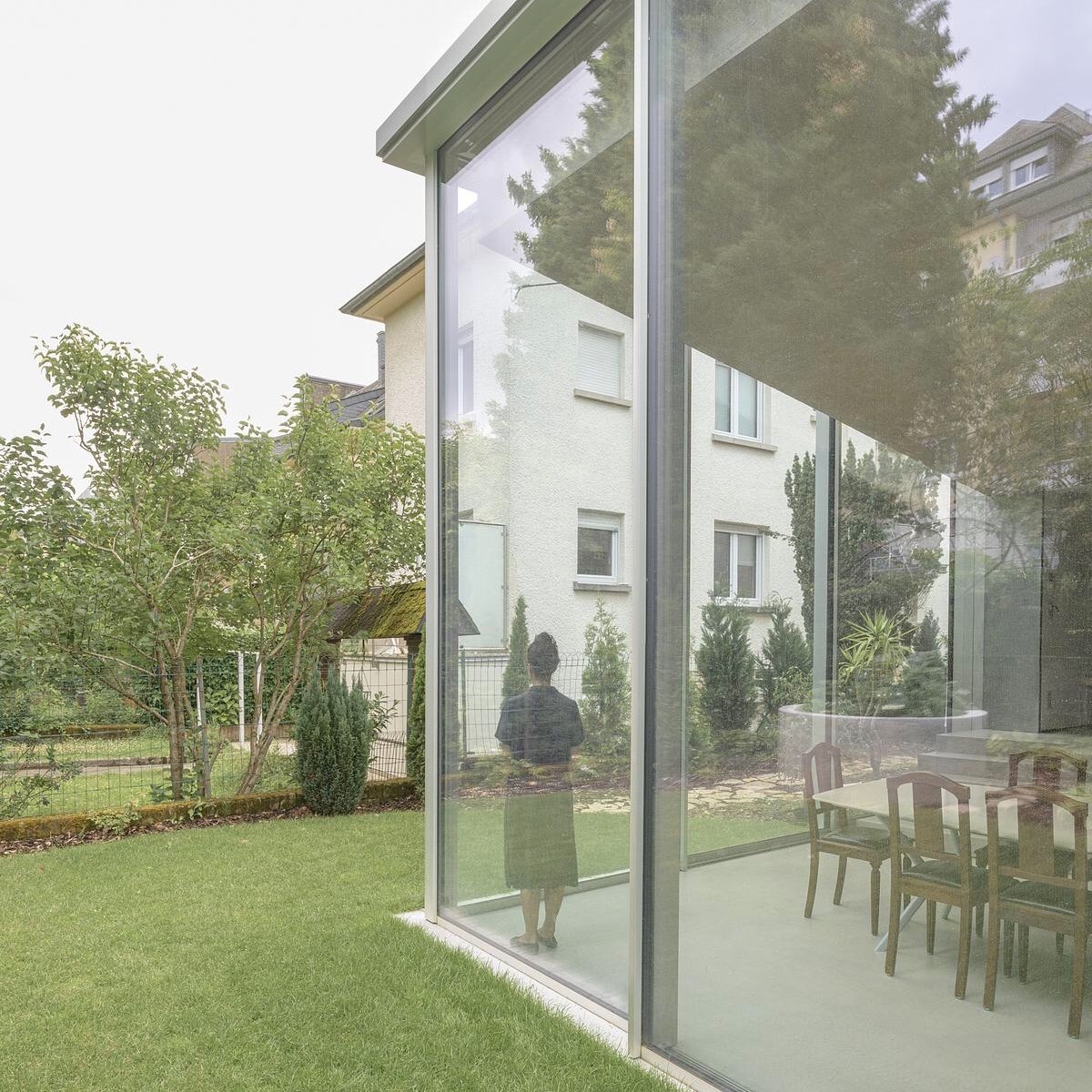
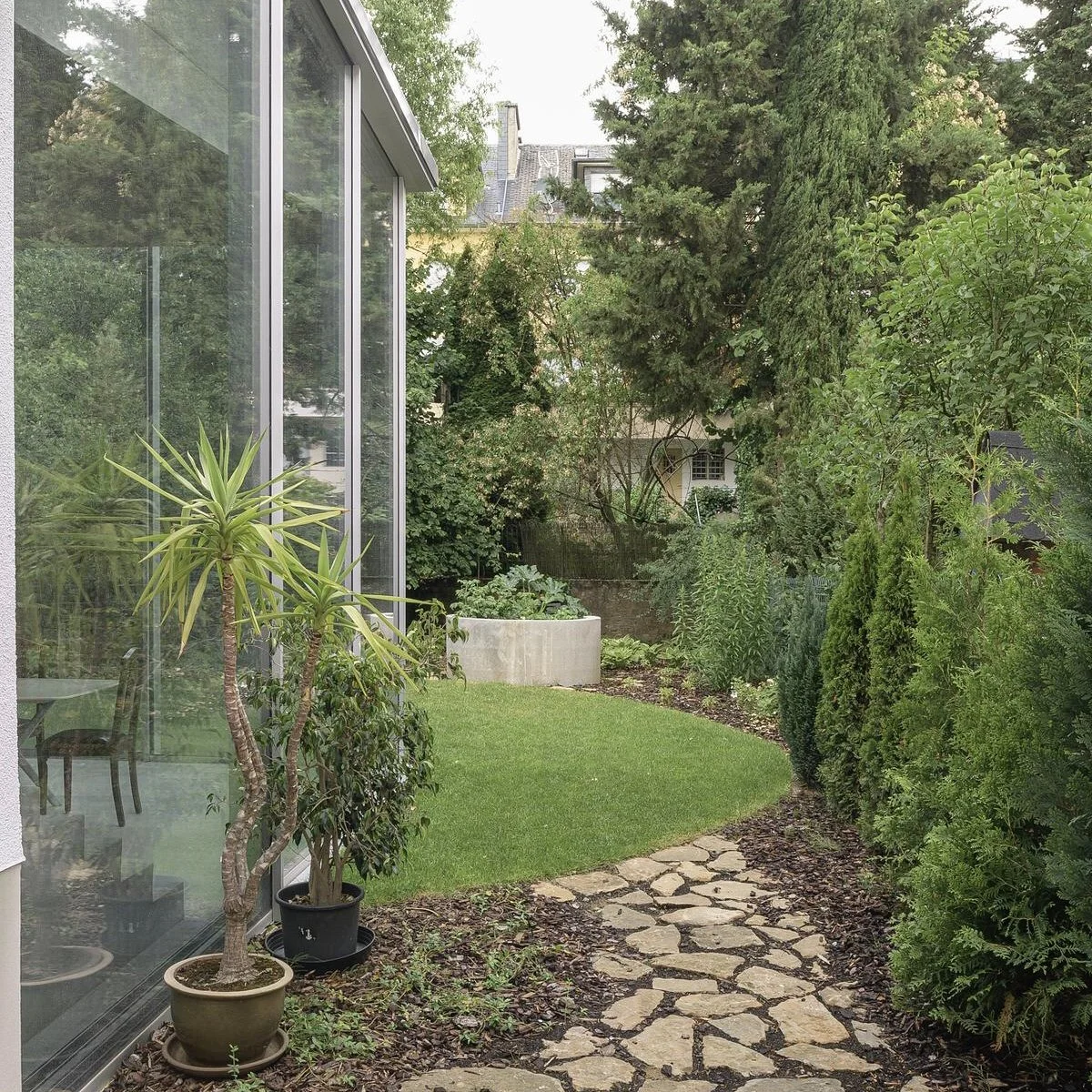
Rather than treating the garden as a backdrop, the project re-establishes it as part of the daily experience of the house. The stepped interior sequence stretches outward toward the north-facing landscape, while a rear façade composed of six sliding glass panels — each rising 4.5 metres — dissolves the threshold between inside and outside. The effect is less that of an extension than of a house reopening itself to air, greenery and depth.
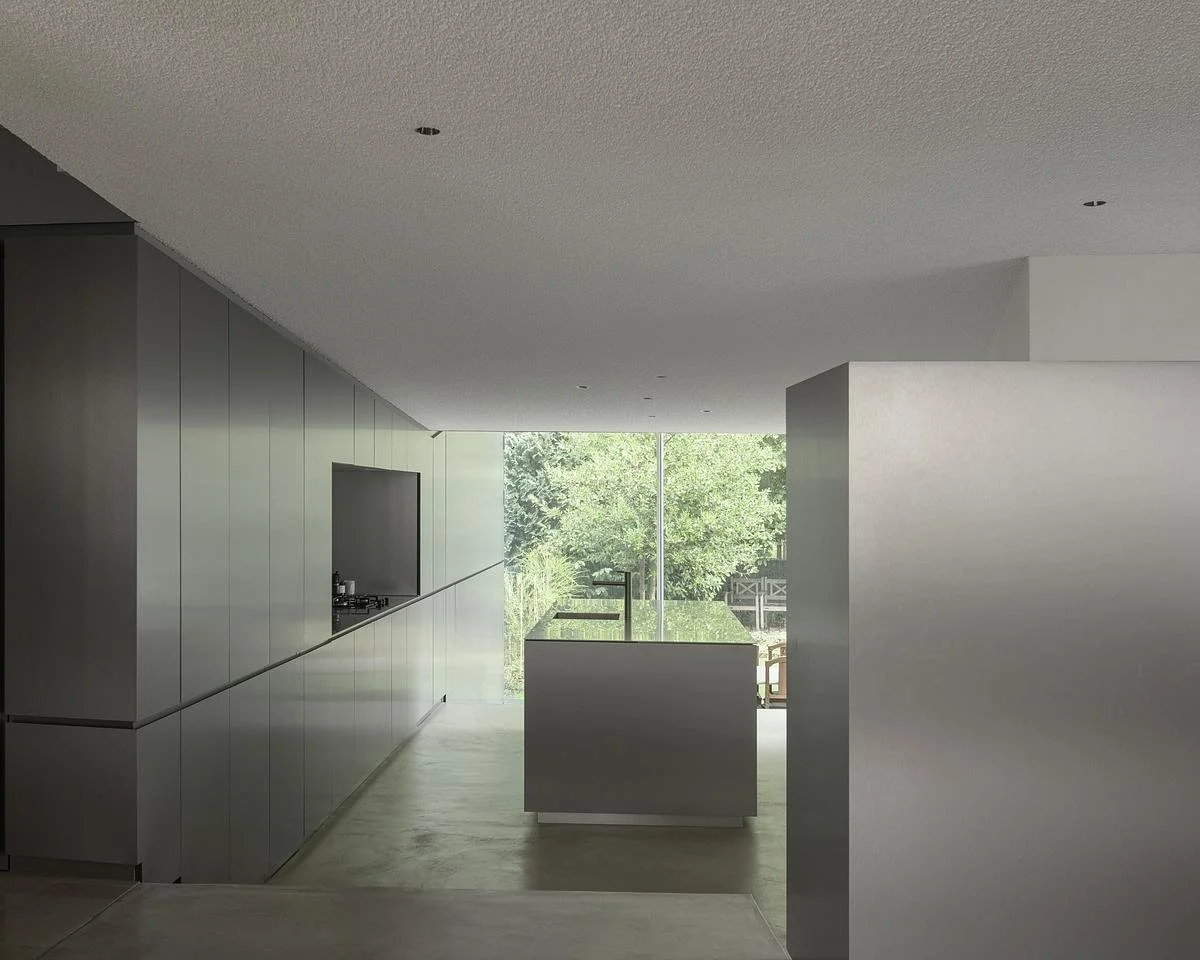
Within that choreography, the kitchen becomes a quiet hinge: an inhabited middle ground between living and gathering, architecture and garden. Integrated alongside storage and secondary functions with subtle precision, it helps anchor the project’s broader transformation from institutional compartmentalisation to domestic continuity.
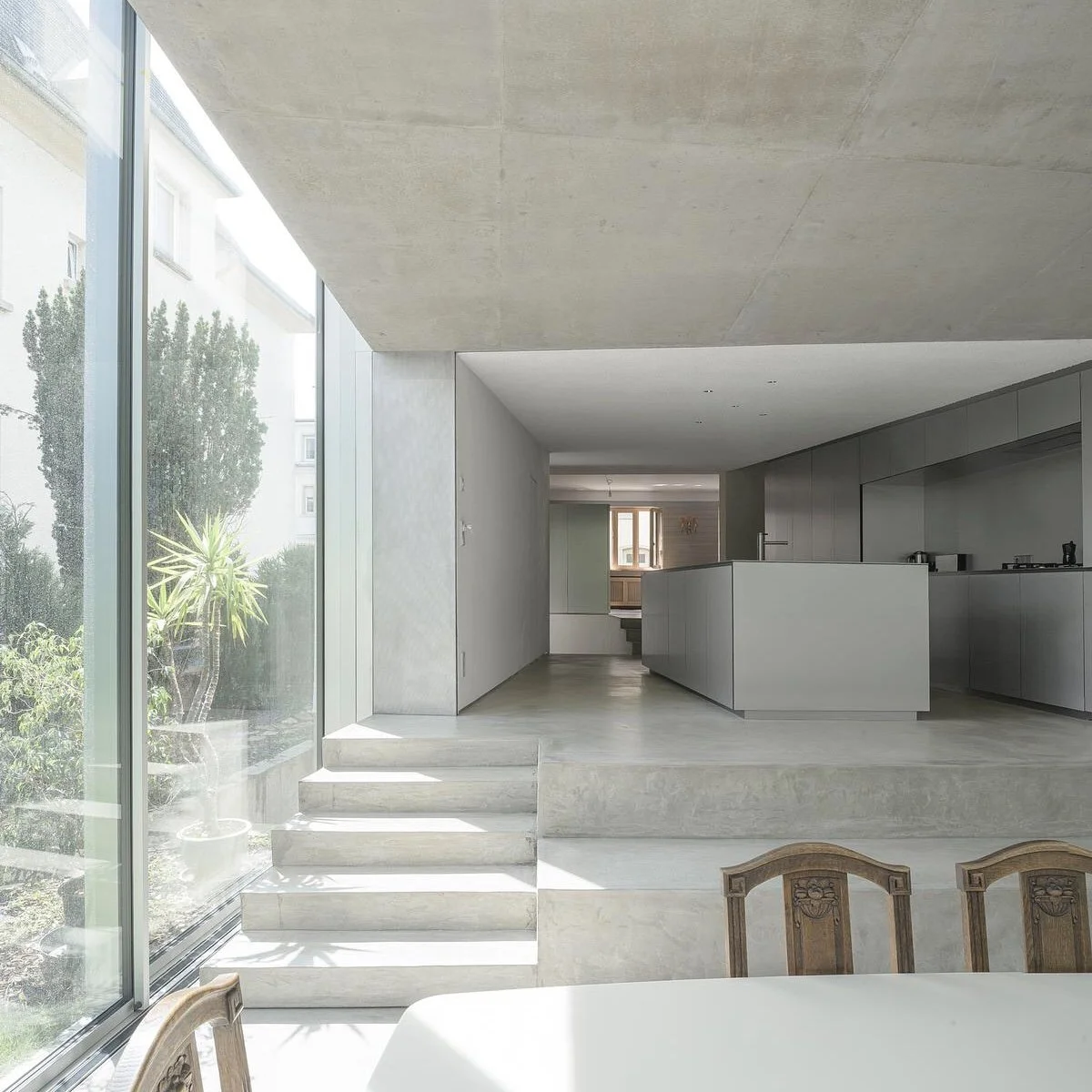
The section of the house reinforces that openness. Sloped ceilings absorb technical systems and structural demands without disturbing the calm clarity of the interior, while the hovering concrete volume above creates a sheltered relationship with the garden below. A second elevated garden above the extension introduces yet another layer of domestic landscape, allowing the project to occupy the block not as a sealed object, but as a more generous and permeable environment.
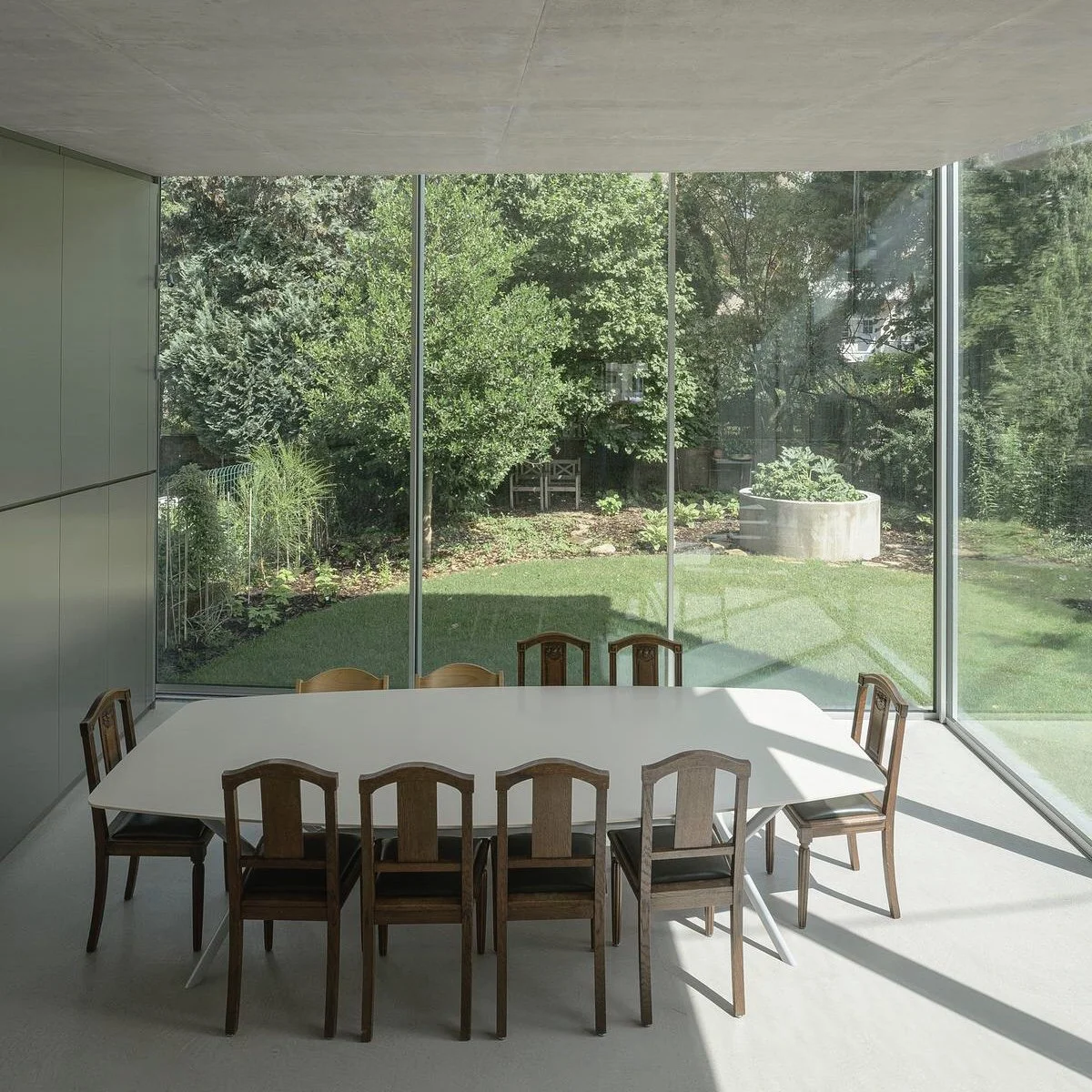
What makes the project compelling is the way it restores intimacy without nostalgia. The architecture does not attempt to reconstruct a lost past, but to recover the conditions for contemporary domestic life: proximity, flexibility, connection to landscape and space for multiple generations to coexist.
In this sense, the house becomes more than a renovation. It becomes a spatial device for returning to one another — and for allowing domestic life to extend once again toward light, garden and the quiet complexity of everyday living.
Credits
Architect: 2001 TBSI
Photographer: Ludmilla Cerveny